
TrustNFT.io Unveils White Paper: Blockchain Combats $2.9 Billion Email Impersonation Crisis
In a significant move highlighting the burgeoning shift of blockchain technology towards real-world utility, TrustNFT.io, a prominent platform specializing in verifiable trust solutions, has released a comprehensive white paper detailing the severe financial and reputational impact of corporate email impersonation. Published on April 6, 2026, the research exposes an alarming $2.9 billion in annual direct losses attributed to Business Email Compromise (BEC) in 2023 alone, underscoring a critical vulnerability for businesses globally.
The white paper, titled "The Impersonation Crisis: How Email Phishing Attacks Are Costing Corporations Billions - and Destroying the Trust They Spent Decades Building," offers an in-depth analysis of the pervasive threat posed by fraudsters mimicking trusted corporate domains. It argues that email impersonation attacks have become one of the most costly and underappreciated risks facing American businesses, with the FBI's Internet Crime Complaint Center reporting that the $2.9 billion figure likely represents less than one-fifth of actual incidents.
The Broader Impact of Impersonation
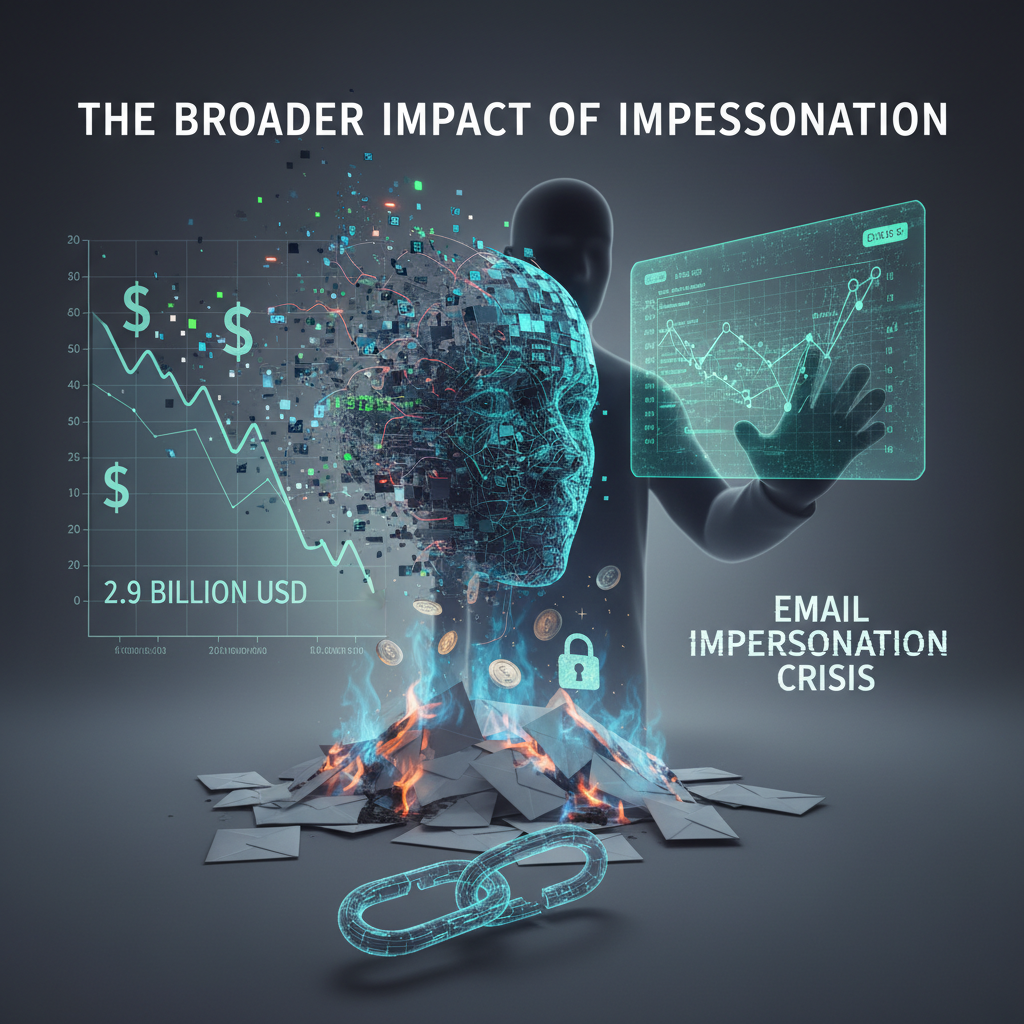
Beyond direct financial losses from wire fraud and fraudulent payment diversion, which can frequently exceed $1 million per significant phishing campaign, the report identifies several other devastating consequences. Companies face amplified support costs, as a single major impersonation campaign can generate thousands of additional inbound customer contacts, each costing between $8 and $15 to handle. Furthermore, brand reputation suffers significantly, with 73% of consumers who receive phishing emails impersonating a brand reporting reduced trust in that brand, irrespective of the company's fault.
The insidious nature of these attacks also leads to a degradation of legitimate email open rates. Sustained impersonation campaigns can cause a 15-30% reduction, directly impacting crucial communications such as billing collection and emergency notices. The white paper also touches upon emerging regulatory liabilities from bodies like the FTC, CFPB, and OCC, indicating a growing legal and compliance burden for affected organizations.
Blockchain as the Bedrock of Trust
TrustNFT.io, a company founded on the principle that trust is the foundation of all interactions, leverages blockchain-anchored technology to combat fraud and counterfeiting across various applications. While the specific email impersonation white paper focuses on blockchain for email verification, TrustNFT.io is known for incorporating Non-Fungible Tokens (NFTs) into its broader suite of verification solutions. For instance, the company utilizes daily dynamic NFTs to provide blockchain-verified employee credentials, making impersonation cryptographically impossible for phone scams. Similarly, its Cerfinity.com platform employs NFT technology to create unforgeable digital certificates for physical products, tackling the global counterfeit crisis.
The company’s solution for email verification, TrustNFT Verify, uses blockchain technology to create an immutable, unforgeable record of verified corporate sending domains. This record is then displayed as a visible trust badge within consumers’ email clients, including popular services like Gmail, Outlook, Yahoo Mail, and AOL Mail. This innovative approach, requiring only a single DNS record addition, can reduce successful impersonation attacks by up to 67% when fully deployed, offering a powerful defense against sophisticated phishing operations.
A Shift Towards Utility in the NFT Space
This initiative by TrustNFT.io exemplifies a broader trend within the NFT and blockchain ecosystem: a pronounced shift from speculative hype towards practical, utility-driven applications. In 2026, the market is increasingly valuing projects that solve real-world problems and provide measurable value beyond simple digital collectibles. Experts note that successful NFT applications are those that verify ownership, unlock access, authenticate products, preserve credentials, or power digital economies that users genuinely want to engage with.
By providing a robust, blockchain-anchored solution to a pressing corporate issue like email impersonation, TrustNFT.io positions itself at the forefront of this evolution. Their work underscores the potential for blockchain and NFT-related technologies to build more secure and trustworthy digital environments, protecting businesses and consumers alike from financially damaging and reputation-eroding scams. This focus on foundational infrastructure and verifiable trust is likely to define the sustained growth and relevance of the NFT space in the coming years.