OpenSea Unleashes ERC-8257: An 'App Store' for On-Chain AI Agents
OpenSea, a leading non-fungible token (NFT) marketplace, has unveiled a groundbreaking Ethereum open standard, ERC-8257, dubbed the "Agent Tool Registry." This innovative standard is poised to transform the interaction between artificial intelligence (AI) agents and the blockchain, effectively creating an "app store" for AI tools directly on the Ethereum network.
Announced on May 27, 2026, the ERC-8257 standard allows developers to register their AI tools on-chain, clearly defining access rules and pricing. Crucially, it empowers AI agents to autonomously discover, acquire access rights to, and invoke these tools without direct human intervention. This development marks a significant convergence of the NFT, AI, and decentralized application (dApp) landscapes, pushing the boundaries of what is possible within Web3.
Bridging Digital Assets with Artificial Intelligence
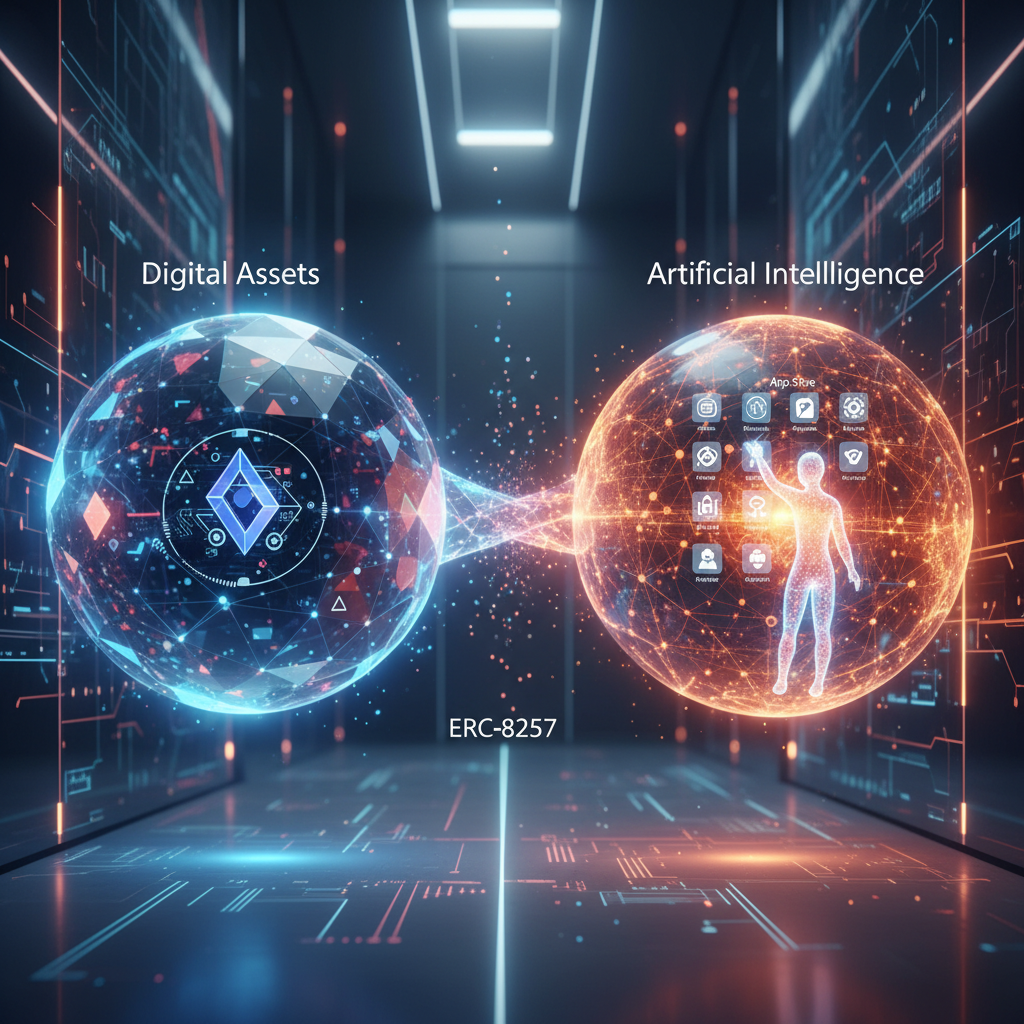
The essence of ERC-8257 lies in its ability to standardize how AI agents can leverage on-chain functionalities and digital assets. By providing a structured framework for tool registration, OpenSea is fostering an environment where AI can become a more active and integral participant in the blockchain economy. Developers can list their specialized AI models, data services, or computational resources as on-chain tools.
For an international audience, this means that an AI program could, for instance, autonomously identify a market opportunity for a specific NFT collection, then use an on-chain tool to analyze sentiment, and finally execute a trade, all based on predefined rules encoded within the standard. The access rules and pricing mechanisms established by developers ensure that these interactions are transparent and economically viable for both tool providers and AI agents utilizing them.
OpenSea emphasizes that ERC-8257 is not a standalone protocol but is designed to be layered and integrated with existing and emerging Web3 standards. It combines with protocols such as ERC-8004 (Agent Identity), which provides unique on-chain identities for AI agents, MCP (Tool Discovery) for efficient searching, and x402 (Payment Protocol), which facilitates automated payments for tool usage. This synergistic approach aims to establish a robust and comprehensive operational infrastructure for AI agents functioning within the Ethereum ecosystem.
A New Era for On-Chain Automation and Utility
The introduction of ERC-8257 has far-reaching implications for the future of NFTs and decentralized finance (DeFi). While NFTs have traditionally been associated with digital art and collectibles, this standard propels them into a new realm of functional utility, particularly in the context of AI-driven automation. Imagine AI agents managing decentralized autonomous organizations (DAOs), optimizing DeFi strategies, or even creating dynamic, interactive digital experiences, all powered by a registry of specialized on-chain tools.
This move by OpenSea suggests a strategic vision that extends beyond being merely a marketplace for digital art. By positioning itself at the forefront of AI-blockchain integration, OpenSea is tapping into the growing demand for verifiable AI and decentralized compute, a trend also observed in other projects within the broader crypto space. The standard is currently in draft form, with OpenSea actively inviting developer feedback to refine its specifications, ensuring it meets the diverse needs of the burgeoning AI and Web3 developer communities.
Ultimately, ERC-8257 has the potential to unlock unprecedented levels of automation and sophistication within decentralized applications. It paves the way for a more intelligent and autonomous Web3, where AI agents can seamlessly interact with digital assets and services, fostering a new wave of innovation and utility across the blockchain landscape. This could significantly enhance the value proposition of NFTs by embedding them within complex, automated, and intelligent systems.