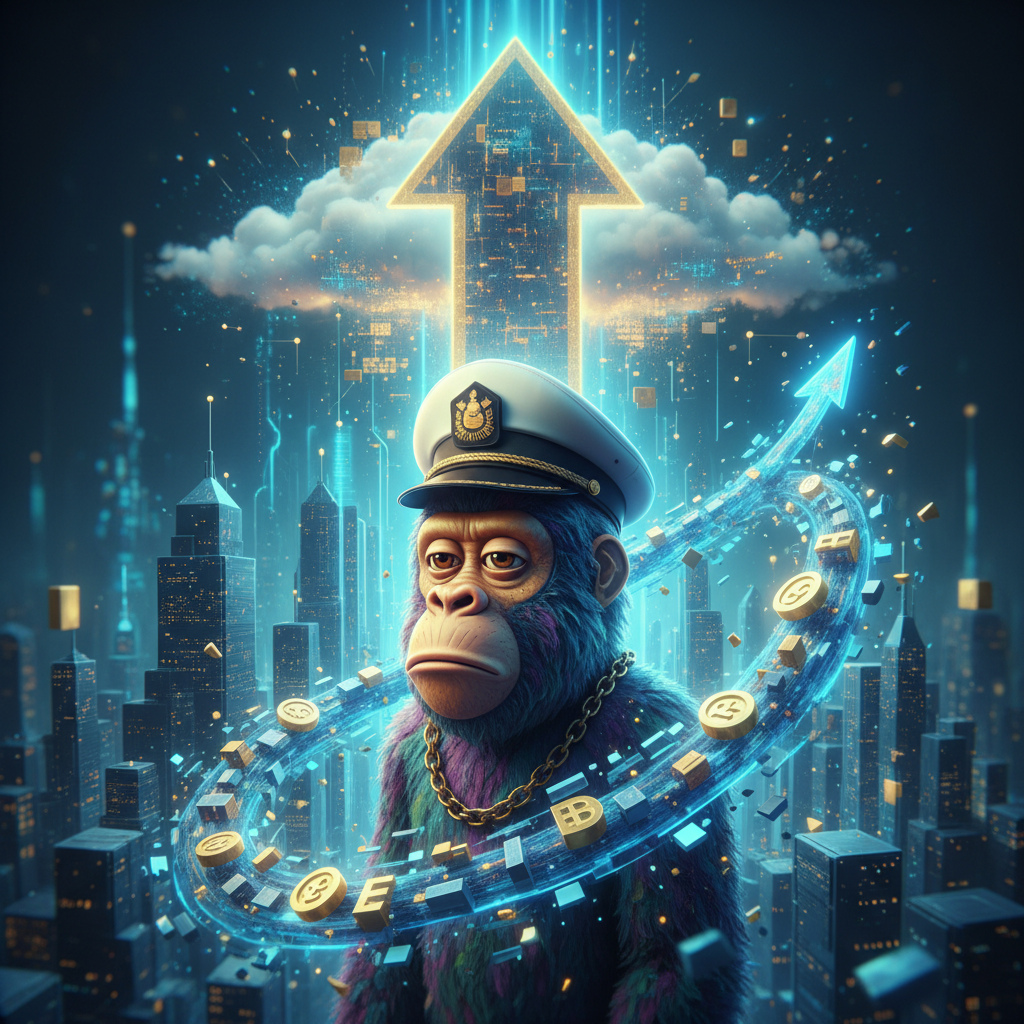
Bored Ape Yacht Club Surges 25%, Signaling Renewed NFT Market Activity
In a notable development for the non-fungible token (NFT) landscape, the iconic Bored Ape Yacht Club (BAYC) collection has witnessed a significant price surge, climbing an impressive 25% in the last 24 hours. This resurgence has pushed the floor price of a Bored Ape NFT above 9 ETH, translating to approximately $22,000, and is being interpreted by market observers as a potential indicator of renewed vitality in the broader NFT market.
The uptick in BAYC's value comes amid a broader, albeit slight, rebound across the cryptocurrency market. The NFT sector, in particular, has shown strong performance, leading the gains with nearly a 4% increase in the past 24 hours. This positive momentum extends beyond just the blue-chip collections, with other notable NFT-related tokens and projects also experiencing gains. For instance, Blur (BLUR) saw a substantial rise of 13.35%, while Pudgy Penguins (PENGU) also posted a healthy 7.50% increase within the same period. Bitcoin (BTC) itself returned above the $76,000 mark, and Ethereum (ETH) broke past $2,300, providing a supportive backdrop for digital asset appreciation.
The Bored Ape Yacht Club, launched by Yuga Labs, remains one of the most recognizable and influential NFT collections, having garnered significant mainstream attention and celebrity endorsement since its inception. Its previous market movements have often been seen as bellwethers for the wider digital collectibles space. The recent 25% leap in its floor price, a critical metric indicating the lowest price for an NFT in a collection, suggests a renewed buying interest and possibly a shift in investor sentiment toward higher-value, established projects.
A Broader Market Awakening?
While a single collection's performance doesn't definitively declare a full-blown bull run for NFTs, the substantial gain by a collection as prominent as Bored Ape Yacht Club strongly suggests a re-evaluation of digital assets by investors. After periods of market contraction and fluctuating sentiment, this latest movement points towards a cautious optimism brewing within the community. Market analysis indicates that younger collectors, particularly Gen Z and Millennials, are increasingly engaging with digital art and NFTs, often prioritizing narrative depth, technical skill, and distinctive styles.
This renewed interest might be fueled by several factors. The general recovery in the broader cryptocurrency market undoubtedly plays a role, as increased liquidity and positive sentiment in Bitcoin and Ethereum often spill over into the NFT sector. Furthermore, ongoing developments within the Yuga Labs ecosystem, the consistent strength of the BAYC community, and the continuous exploration of utility for these digital assets could all contribute to increased demand. The market for digital art, valued between $5.5–$6.2 billion, is increasingly seen as a serious collectible segment, further legitimizing high-value NFT projects.
The Road Ahead for Digital Collectibles

The recent performance of Bored Ape Yacht Club and the broader NFT sector hints at an evolving market where utility and established provenance are gaining traction. The narrative around NFTs has been shifting from pure speculation to tangible applications, including integration into gaming, virtual reality, and even real-world asset tokenization. As the industry matures, developers are increasingly focusing on sustainable tokenomics and interoperability, allowing NFT assets to function across various platforms and metaverse environments.
The sustained interest from new generations of collectors and the continuous innovation in how NFTs are created, traded, and utilized suggest that digital collectibles are far from a fleeting trend. While market volatility remains a characteristic of the crypto space, the resilience and sudden resurgence of key collections like BAYC underscore the enduring appeal and potential long-term value proposition of non-fungible tokens. The digital art and collectibles market, once dismissed by some, is now demonstrably carving out a significant niche within the global art economy, driven by technological advancements and a growing appreciation for digital ownership.