TeraWulf's Q1: AI/HPC Revenue Outpaces Bitcoin Mining for the First Time
In a significant shift reflecting the evolving landscape of the digital asset industry, Bitcoin mining firm TeraWulf Inc. announced its first-quarter 2026 financial results, revealing that revenue generated from its High-Performance Computing (HPC) leasing operations has surpassed its traditional Bitcoin mining earnings for the first time. This milestone underscores a growing trend among crypto miners to diversify revenue streams amidst fluctuating market conditions and increasing competition in the core mining business.
For the three months ended March 31, 2026, TeraWulf reported total revenue of $34 million. Crucially, HPC leasing accounted for approximately $21 million of this total, while Bitcoin mining contributed around $13 million. This divergence marks a pivotal moment, with HPC revenue seeing a substantial quarter-over-quarter increase of 117%, contrasting sharply with a 50% decrease in Bitcoin mining revenue over the same period. While the company reported a net loss of $427 million for the quarter, largely due to increased operating expenses, depreciation, and impairment charges, the strategic pivot towards more stable, contracted revenue models is clearly gaining traction.
The Economic Imperative: Why Miners Are Pivoting
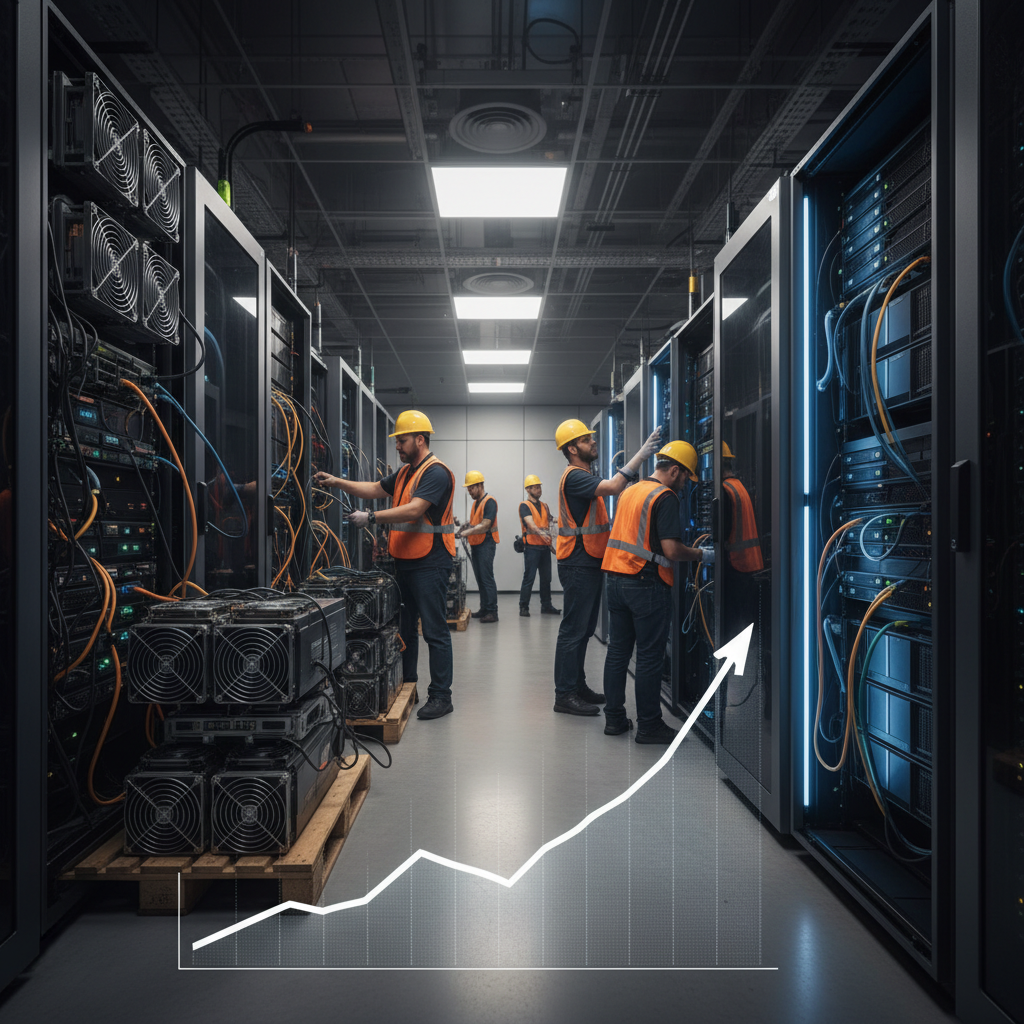
The decision by TeraWulf, and indeed many other public mining entities, to aggressively pursue AI and HPC initiatives is not arbitrary. The Bitcoin mining sector has navigated a period of intense pressure, marked by several contributing factors. The Bitcoin halving event in April 2024 significantly cut block rewards, directly impacting miners' primary revenue source. This, combined with macroeconomic headwinds and a general crypto market downturn, led to some of the toughest profitability environments on record for miners throughout 2025.
Adding to the challenges, Bitcoin's network hashrate, which represents the total computational power dedicated to processing transactions, experienced a rare contraction in the first quarter of 2026. This marked its first negative growth period in over five years, with a year-on-year decline of approximately 4%. This slowdown is directly linked to miners reallocating their computational infrastructure towards more lucrative AI-focused data processing, where demand and pricing dynamics remain strong. Faced with declining hashprice – the estimated revenue per unit of hashrate – and increasing operational costs, the pursuit of alternative, more predictable revenue streams has become an economic imperative.
TeraWulf's Strategic Vision and HPC Expansion
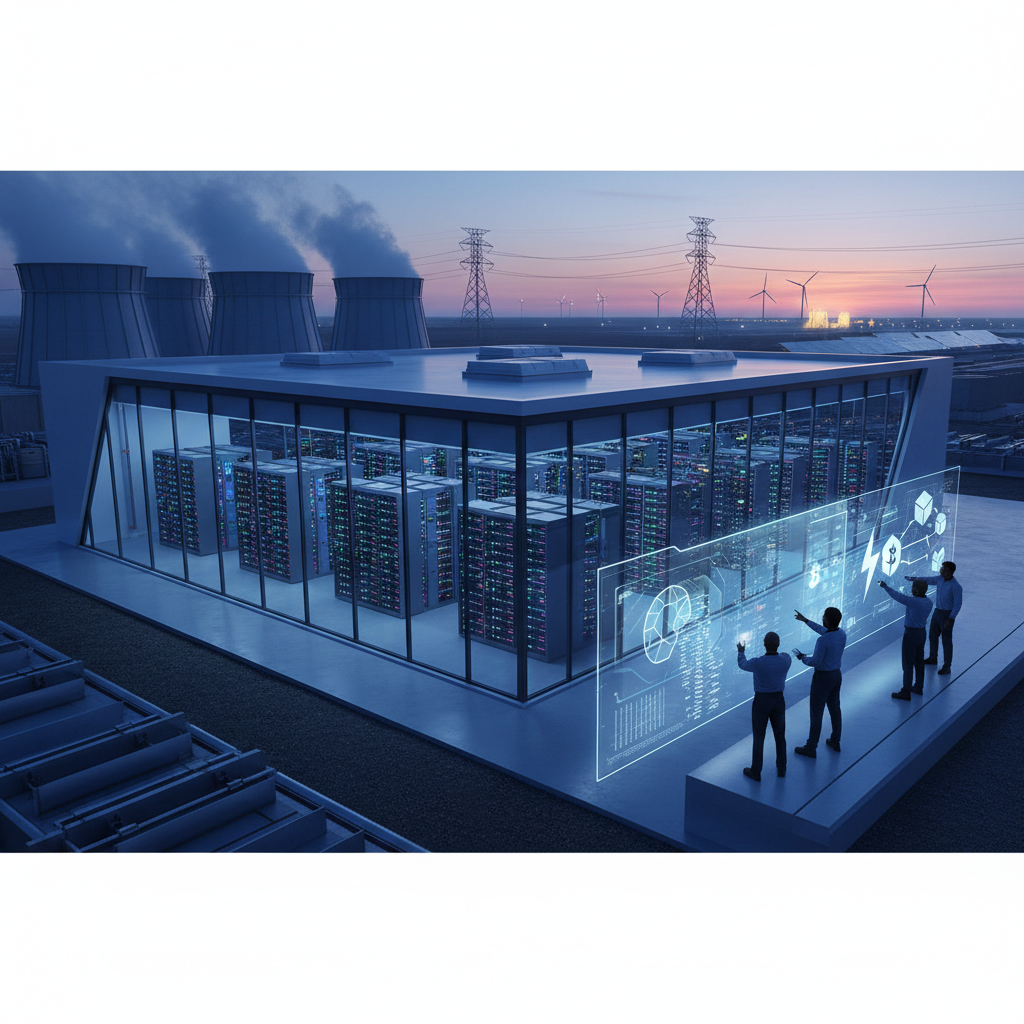
TeraWulf's success in growing its HPC segment can be attributed to its forward-thinking strategy and existing infrastructure. The company's Lake Mariner data center, with a capacity of 60MW, is a key asset in generating HPC revenue as it expands its AI and cloud computing operations. HPC leasing involves providing the computational power of their robust data centers to businesses requiring high-performance capabilities, typically for AI model training, complex data analysis, and other demanding tasks. This allows TeraWulf to leverage its significant investments in power infrastructure and advanced computing hardware beyond just Bitcoin mining.
The company's CFO, Patrick Fleury, articulated this strategic direction, stating that TeraWulf is shifting towards a more stable contracted revenue model, thereby reducing its reliance on the inherent volatility of Bitcoin mining. This involves repurposing some of its Bitcoin mining operations to support higher-value HPC workloads, a move that provides more consistent and predictable income. Such diversification is seen as a crucial pathway for mining companies to de-risk their operations and establish a more resilient business model in the long term.
Implications for the Broader Mining Industry
TeraWulf's Q1 results serve as a compelling case study for the entire Bitcoin mining industry. As mining profitability continues to be squeezed by factors like the halving, rising energy costs, and intense competition, the pivot to AI and HPC is emerging as a viable and increasingly attractive survival strategy. Companies like IREN and HIVE Digital Technologies have also been noted for making similar strategic shifts, securing substantial contracts with major tech firms to convert mining facilities into high-performance computing centers.
This structural shift could lead to several significant changes in the industry. For one, it may alleviate some of the pressure on mining companies to liquidate their Bitcoin holdings, as they gain alternative revenue sources. Furthermore, it could accelerate innovation in data center infrastructure and energy management, as miners seek to optimize their facilities for diverse computational needs. While the traditional Bitcoin mining sector faces ongoing pressures, the embrace of AI and HPC represents a dynamic evolution, offering a blueprint for resilience and future growth within the digital infrastructure landscape.