
Bitcoin Mining Giants Embrace Stratum V2 for Enhanced Network Resilience
In a significant move poised to reshape the landscape of Bitcoin mining, seven leading mining pools have formally joined the Stratum V2 working group. This collaborative effort signals a strong industry-wide commitment to adopting a new, open standard protocol designed to bolster the efficiency, security, and decentralization of the Bitcoin network. The initiative arrives at a critical juncture for miners, who continue to grapple with rising operational costs and fluctuating profitability in a highly competitive market.
Pioneering a More Robust Mining Protocol
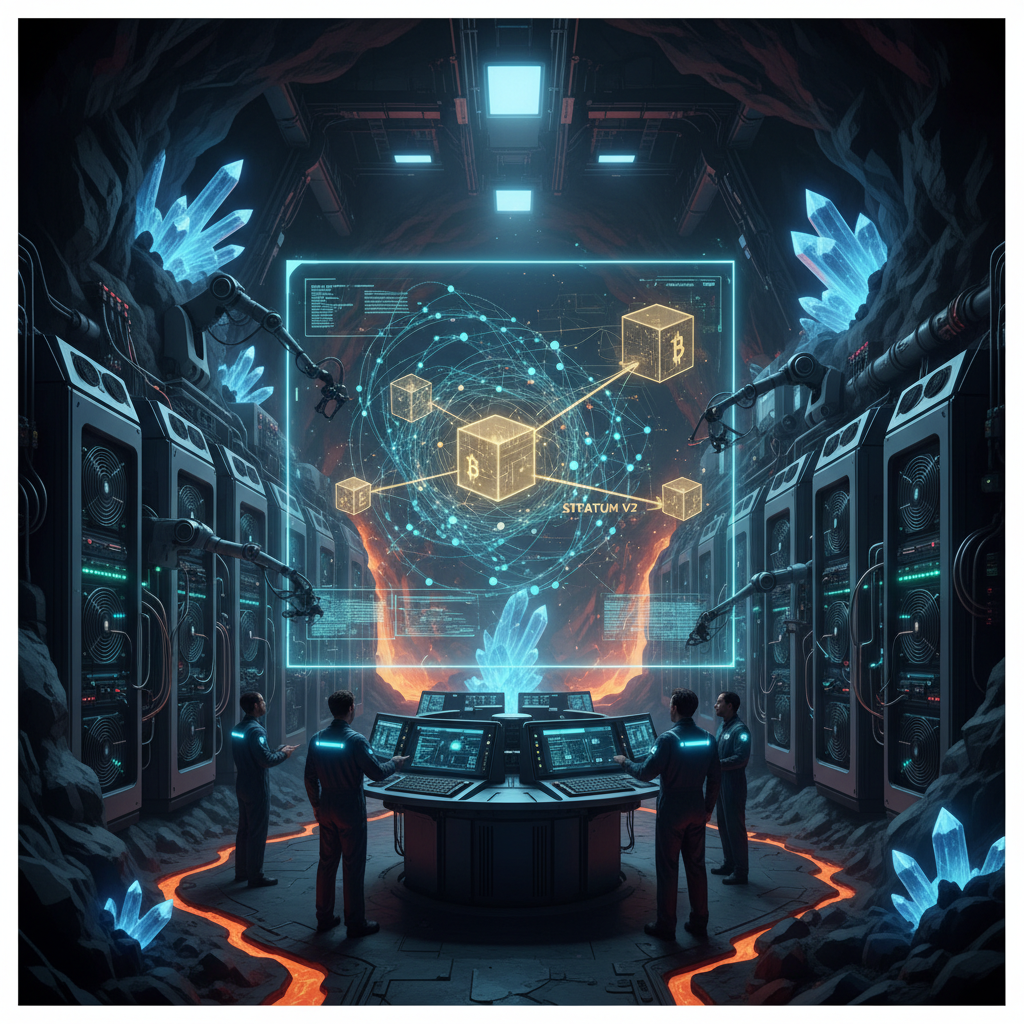
The Stratum V2 protocol represents a substantial upgrade from its predecessor, Stratum V1, which has served as the backbone for communication between mining devices and pools for years. The core objective of Stratum V2 is to enhance communication between these entities, providing a more secure and efficient data exchange mechanism. Critically, it also empowers individual miners with greater control over block template selection, rather than solely relying on mining pool operators. This increased autonomy is a significant step towards a more decentralized mining ecosystem, aligning with Bitcoin's foundational principles.
By offering superior security features, Stratum V2 aims to mitigate risks associated with potential attacks or manipulations within mining pools. The protocol's design focuses on reducing data overhead, which can translate into marginal but impactful efficiency gains for miners. In an environment where every joule per terahash counts, even small improvements in operational efficiency can contribute to a miner's bottom line, particularly for those utilizing less advanced hardware or facing higher electricity costs.
Unification Amidst Economic Pressures

The list of mining giants committing to Stratum V2 includes prominent names such as AntPool, Block Inc., F2Pool, Foundry, MARA Foundation, SpiderPool, and DMND. The participation of Foundry and AntPool is particularly noteworthy, given their substantial share of the global Bitcoin mining hashrate. Foundry alone reportedly commands nearly 30% of the network's hash power, with AntPool contributing approximately 17.7%. Their involvement lends considerable weight to the working group and is expected to accelerate the broader adoption of the new protocol across the industry.
This push for improved infrastructure comes as the Bitcoin mining sector navigates a period of significant economic strain. Recent analyses from firms like CoinShares suggest that a notable portion of the global Bitcoin mining fleet—estimated between 15% to 20%—may currently be operating at a loss.
The first quarter of 2026 was identified as one of the most challenging for miners since the April 2024 halving event, which slashed block rewards by 50%. Hashprice, a key metric indicating miner revenue per unit of computing power, has recently approached near five-year lows. Furthermore, the average cash cost to produce one Bitcoin for many publicly listed miners has reportedly reached figures between $79,995 and $90,000, making profitability a tightrope walk as Bitcoin's price fluctuates.
While Bitcoin mining difficulty experienced a 2.30% decline around May 2, offering a temporary reprieve, forecasts indicate an impending increase in difficulty around May 15, which will again intensify competition. These combined pressures underscore the urgent need for miners to optimize every aspect of their operations, making the adoption of more efficient and resilient protocols like Stratum V2 paramount for long-term viability.
Future Outlook for Bitcoin Mining
The collective backing of Stratum V2 by such influential players signals a pivotal moment for the Bitcoin mining industry. As the protocol moves from technical development towards wider implementation, it promises to cultivate a more decentralized, secure, and economically viable environment for miners globally. This collaborative step demonstrates the industry's capacity for self-improvement and adaptation, ensuring the foundational security and integrity of the Bitcoin network for years to come.