Bitcoin Mining Embraces Green Revolution, Sheds 'Energy Hog' Label
Once maligned as an energy guzzler, the Bitcoin mining industry is undergoing a significant transformation, with new data revealing that over 56% of the global network is now powered by sustainable energy sources as of early 2026. This "green revolution" marks a pivotal shift, challenging long-held criticisms and positioning Bitcoin mining as an unlikely catalyst for renewable energy infrastructure worldwide.
The Shifting Energy Landscape of Bitcoin Mining
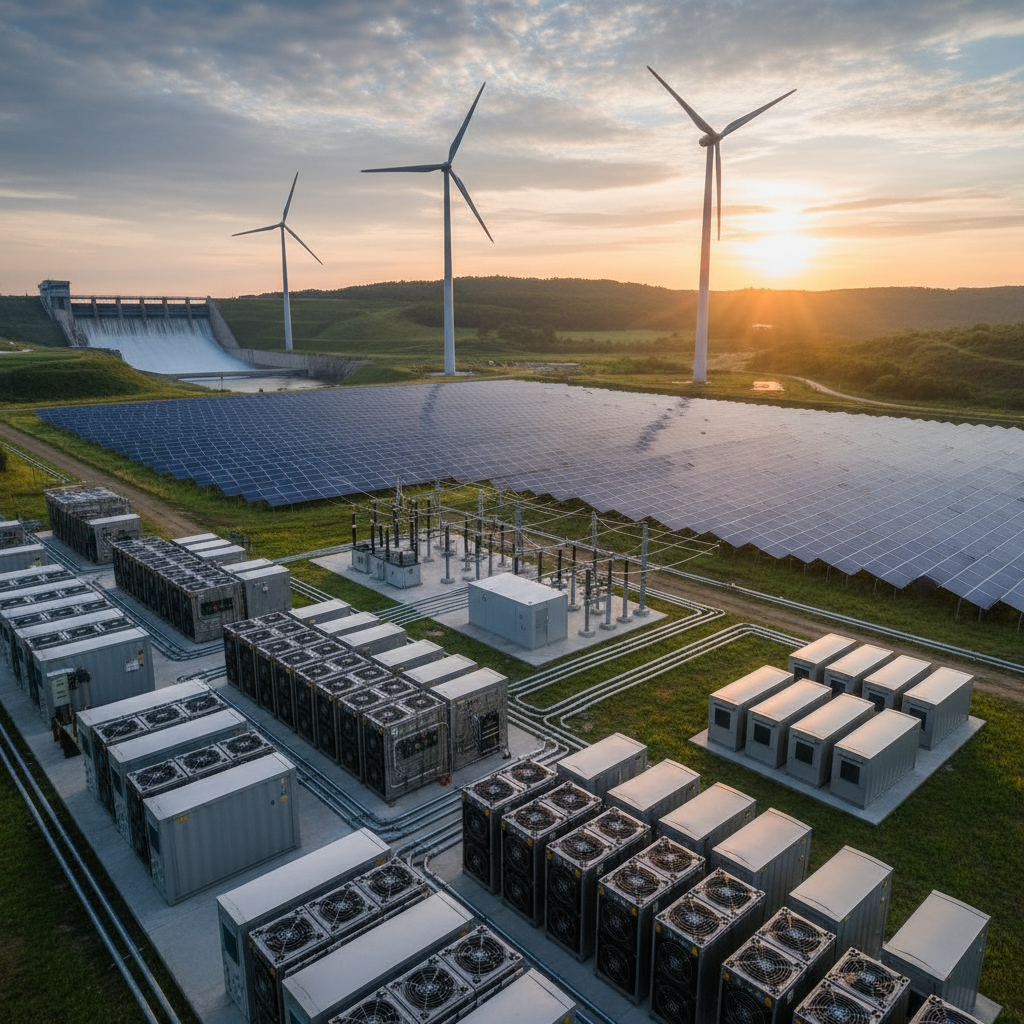
For years, Bitcoin mining faced intense scrutiny over its environmental footprint, often drawing comparisons to the energy consumption of entire nations. However, recent analysis from sources like the Digital Assets Research Institute and ESG experts indicates a dramatic change. The proportion of sustainable energy in Bitcoin's power mix has surged from approximately 34% in 2021 to over 56% in early 2026. This represents a fundamental reorientation in how and where miners operate, actively seeking out and often directly investing in renewable energy solutions.
This shift isn't merely a public relations exercise; it's driven by compelling economic and technological factors. The falling costs of renewable energy, particularly solar and wind, have made green power sources increasingly attractive for miners. Operating at the lowest possible electricity rates is paramount for profitability in an industry with constantly adjusting network difficulty and post-halving reduced block rewards. Consequently, miners are increasingly flocking to regions with abundant and often curtailed renewable energy, turning what was once considered waste energy into valuable computation.
Technological Advancements and Grid Stability
A key enabler of this green transition is the rapid advancement in mining hardware efficiency. Next-generation Application-Specific Integrated Circuit (ASIC) miners, such as the Bitmain Antminer S21 Pro and MicroBT WhatsMiner M60S, are delivering significantly more hashes per watt than their predecessors. For instance, hardware efficiency has improved from roughly 100 joules per terahash (J/TH) in 2018 to under 15 J/TH in the latest 2026-generation machines, representing a nearly sevenfold improvement over eight years. This technological leap allows miners to extract more value from less energy, making sustainable power sources even more economically viable.
Beyond simply consuming green energy, Bitcoin mining is also playing a critical role in stabilizing energy grids. Miners often enter into "interruptible load" agreements, acting as flexible demand centers that can power down rapidly during peak grid demand or supply shortages. Conversely, they can absorb surplus energy during off-peak hours or when renewable generation (like wind or solar) exceeds immediate grid capacity, preventing curtailment and optimizing grid utilization. This unique characteristic helps balance the grid and makes renewable energy projects, especially those in remote areas, more economically feasible by providing a consistent "anchor demand" for their output. Countries like Bhutan and Ethiopia have even integrated Bitcoin mining into their national economic strategies to leverage surplus hydroelectric power.
Beyond the Misconceptions: A Redefined Environmental Impact
The narrative of Bitcoin as an environmental villain is increasingly outdated. While the network's annualized electricity consumption is estimated between 138 TWh and 204 TWh in 2026, comparable to some mid-sized industrial economies, context is crucial. A February 2026 report by Paradigm noted that Bitcoin's global energy use constitutes about 0.23% of the total, with carbon emissions around 0.08% of the world's total. When viewed against the energy consumption of the global banking system, which is estimated to be approximately 35.4% higher than the Bitcoin network's, the comparisons become starker.
Furthermore, the common criticism of "energy per transaction" is often misleading, as it divides the network's total annual energy use by the number of transactions, ignoring that mining secures the entire network regardless of transaction volume. The true value lies in the energy used to secure the network's integrity and value, not individual transactions. As the industry continues to innovate and prioritize sustainable practices, 2026 stands out as the year Bitcoin mining truly redefines its environmental legacy, transitioning from a perceived liability to a potential asset in the global pursuit of greener energy solutions.