IREN Navigates Q1 Downturn with Aggressive Pivot to AI Cloud Services
In a significant move reflecting the evolving landscape of the digital asset industry, IREN Limited (NASDAQ: IREN), a prominent player in Bitcoin mining, announced a notable decrease in its first-quarter revenue for 2026, attributing the shift to a challenging Bitcoin economic environment and a concerted effort to expand its Artificial Intelligence (AI) Cloud capacity. The company's revenue for the quarter ending March 31, 2026, stood at $144.8 million, a 22% decline from the previous quarter's $184.7 million.
The downturn in revenue, approximately $39.9 million, was primarily influenced by a lower average Bitcoin price throughout the quarter and the strategic removal of older mining equipment as IREN transitions towards new, more efficient GPU systems for its AI Cloud services. This strategic pivot resulted in a net loss of $247.8 million, a stark contrast to the $155.4 million loss reported in the preceding quarter. Adjusted EBITDA also saw a reduction, falling to $59.5 million from $75.3 million.
The Strategic Shift Towards AI
IREN's financial report underscores a broader trend within the Bitcoin mining sector, where companies are increasingly diversifying their operations to leverage the booming demand for AI and high-performance computing (HPC) infrastructure. The company's co-founder and co-CEO, Daniel Roberts, emphasized the global shortage of computing power, stating, “The world is structurally short compute, and the bottleneck is delivered data center and GPU capacity.” This perspective is driving IREN's aggressive investment in AI Cloud services.
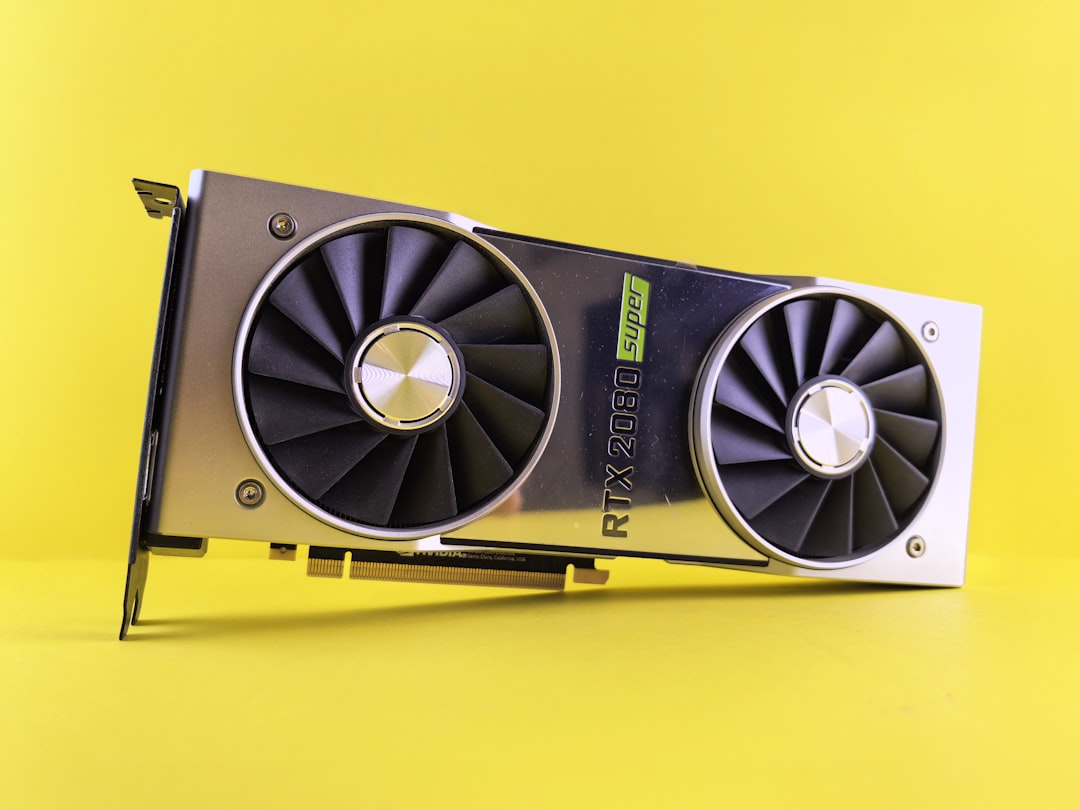
A key development highlighted in the report is IREN's new five-year, $3.4 billion AI Cloud contract with NVIDIA Corporation, specifically for air-cooled Blackwell GPUs. This hardware is slated for deployment in 60MW of existing data center space at Childress, with customer ramp-up anticipated to begin in early 2027. Furthermore, IREN has entered into a broader 5GW partnership with NVIDIA, which encompasses data center designs and infrastructure built around NVIDIA systems across IREN's global power base.
This pivot is not unique to IREN. Other significant Bitcoin miners, such as Hut 8 and Soluna, are also making substantial investments in AI and HPC data centers, recognizing the higher margins and more predictable revenue streams offered by these services compared to the often volatile nature of Bitcoin mining. Hut 8, for instance, recently secured a 15-year, $9.8 billion AI data center lease in Texas, sending its stock to an all-time high. Soluna, another developer of green data centers, announced its April 2026 business update, detailing expansions in both Bitcoin mining and AI-ready campuses.
Implications for the Mining Landscape
The financial adjustments at IREN included $140.4 million in non-cash impairments, primarily stemming from the retirement of older mining hardware, and $23.7 million in unrealized losses related to capped calls linked to convertible notes. Despite these short-term financial impacts, the company sees long-term value in its strategic reorientation. By reducing mining activity, IREN also saw a corresponding decrease in power usage and associated costs, saving $25.9 million in the quarter.
The strategic shift by major publicly traded miners towards AI infrastructure is reshaping the dynamics of the entire Bitcoin mining industry. While some companies remain dedicated to Bitcoin mining, like American Bitcoin, which recently increased its BTC holdings to 7,300 Bitcoin, the lure of stable, high-margin AI contracts is undeniable. Analysts project that publicly listed miners could derive a significant portion of their revenues, potentially up to 70%, from AI services by the end of 2026. This evolution could lead to a more diversified and robust business model for these companies, providing resilience against Bitcoin price fluctuations and mining difficulty adjustments.