Bitcoin Miners Pivot to AI: A Strategic Shift Driven by Evolving Economics
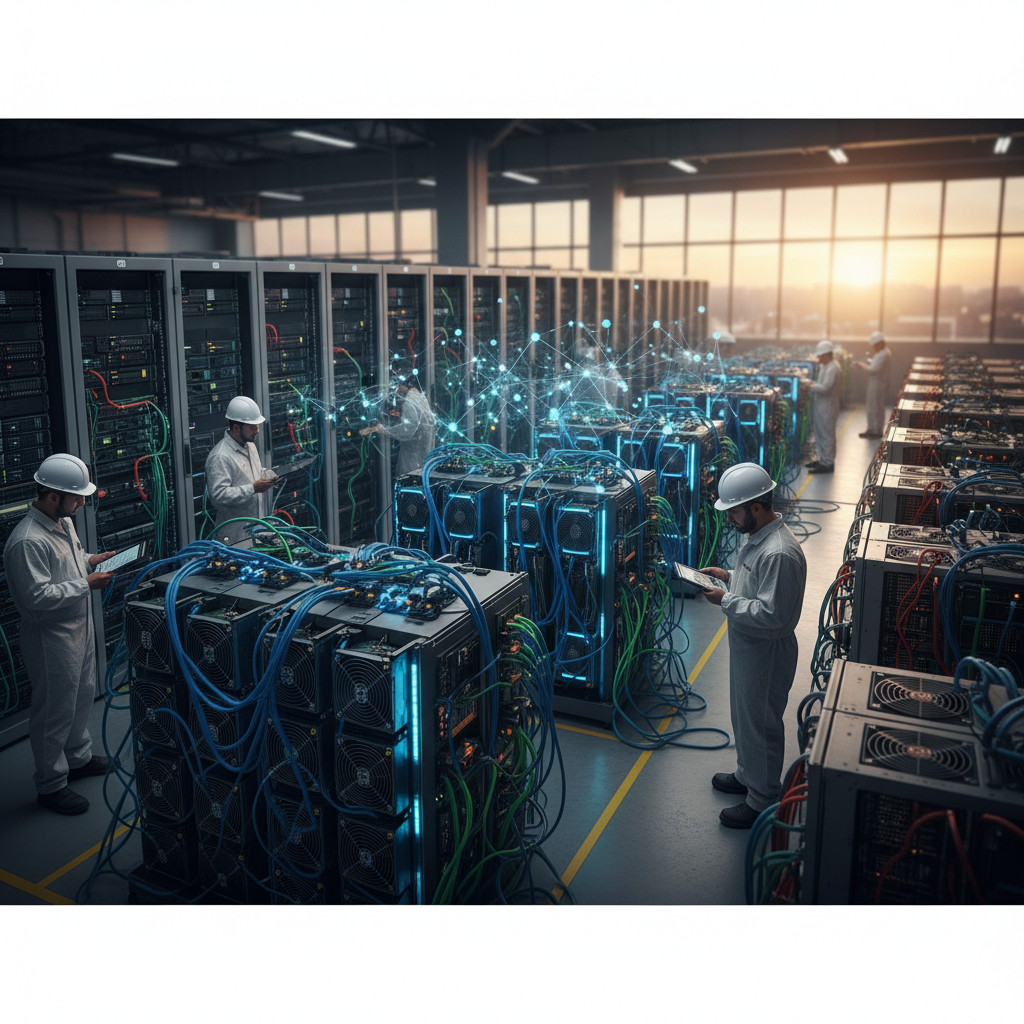
The landscape of Bitcoin mining is undergoing a profound transformation, with major industry players increasingly redirecting their resources from pure cryptocurrency mining towards Artificial Intelligence (AI) and High-Performance Computing (HPC) infrastructure. This strategic pivot marks a significant evolution for the sector, driven by a confluence of factors that have reshaped mining profitability and highlighted new opportunities in the digital infrastructure space.
The Economic Squeeze on Traditional Bitcoin Mining
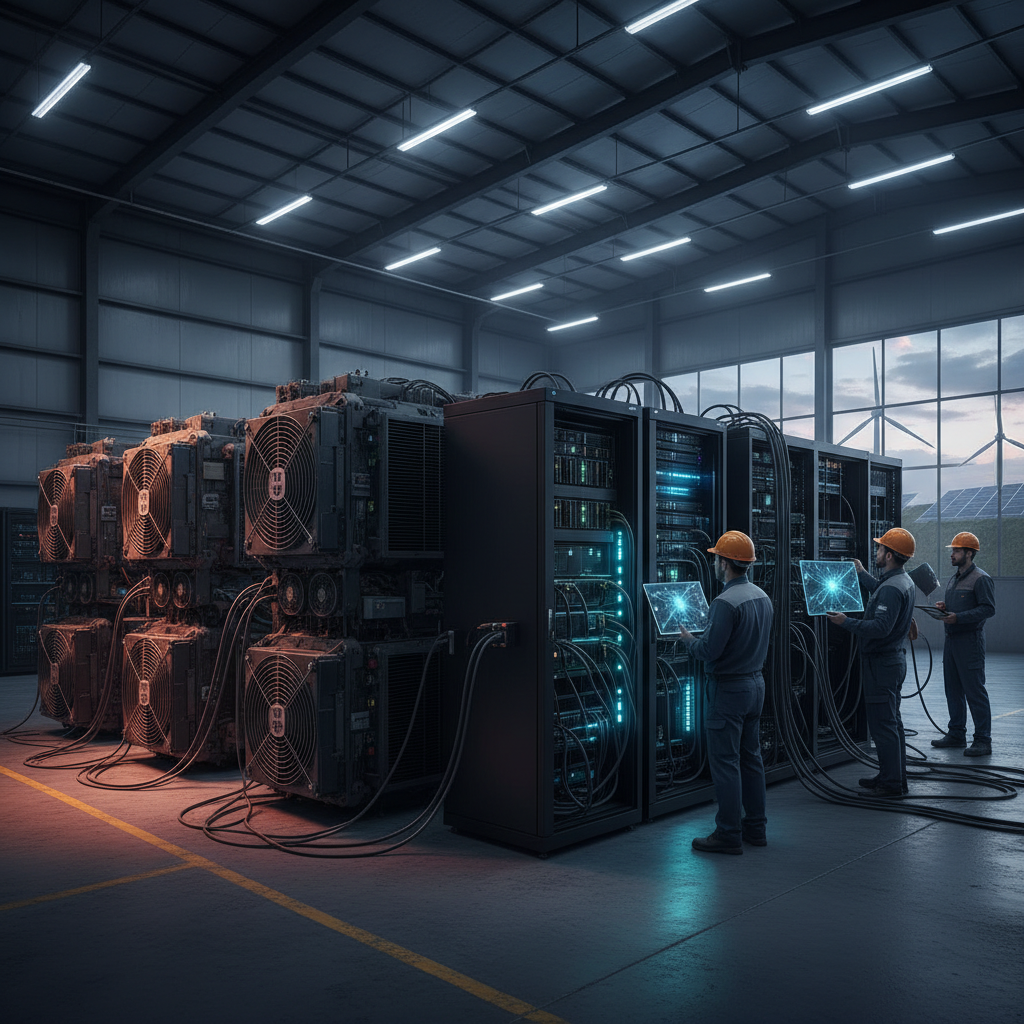
For years, Bitcoin mining was heralded as a highly lucrative venture, but recent economic shifts have severely challenged its profitability. A key metric, the 'hash price' – representing the expected revenue per unit of computing power – has plummeted to near record lows. Concurrently, electricity costs, a dominant operational expense, have escalated sharply. Reports indicate that electricity now consumes roughly 40% of mining revenue, pushing total operational costs into the low-to-mid 90% range for many miners. This combination has seen Bitcoin mining gross margins collapse from over 90% during the 2021 bull run to approximately 60% currently, with further declines anticipated.
Adding to these pressures is Bitcoin's inherent halving mechanism, which automatically slashes miner rewards by half approximately every four years. The most recent halving in April 2024 reduced the block reward to 3.125 BTC, with the next scheduled for 2028, further tightening profit margins irrespective of market conditions. This constant downward pressure on revenue, coupled with soaring input costs, has rendered traditional Bitcoin mining increasingly unsustainable for a segment of the industry. Data suggests that around 20% of miners are currently operating below their cash-cost breakeven point.
The Allure of AI and High-Performance Computing

In stark contrast to the tightening margins in Bitcoin mining, the demand for AI and HPC data center services is booming, offering significantly more attractive economic prospects. AI cloud operations are reportedly generating gross margins in the mid-80s, far surpassing those of Bitcoin mining. This substantial difference in profitability, coupled with more predictable revenue streams, has enticed numerous Bitcoin mining giants to re-evaluate their core business models.
Companies that once focused exclusively on Bitcoin mining are now making concerted efforts to transition into broader digital infrastructure providers. For example, Bitfarms recently rebranded as Keel Infrastructure Corp., signaling a clear shift in strategy. Other prominent miners like Cipher, Marathon Digital, Riot Platforms, Core Scientific, Hut 8 Corp., and TeraWulf are actively pivoting by divesting Bitcoin mining assets or repurposing their expansive data center footprints to host AI and HPC workloads.
This strategic redirection is not merely conceptual; it is manifesting in reported earnings. In Q4 2025, Core Scientific derived approximately 44% of its revenue from 'colocation' or data center services, a significant increase from 18% in the preceding quarter. Similarly, TeraWulf saw 27% of its Q4 revenue come from HPC leasing, up from 14%. Even companies that remain primarily Bitcoin miners, such as IREN Ltd., reported 9.4% of their latest quarterly revenue from AI cloud services. This indicates a tangible and rapid shift in revenue composition within the industry.
Impact on Bitcoin Network and Miner Reserves
The financial pressures and the strategic pivot towards AI/HPC have led to a notable trend in Bitcoin miner reserves. Publicly traded miners liquidated over 32,000 BTC in the first quarter of 2026 alone, setting a new quarterly record and surpassing their combined sell-off for all of 2025. This aggressive selling, exemplified by Marathon Digital's sale of 15,133 BTC for approximately $1.10 billion to repurchase convertible senior notes and fund AI infrastructure, highlights the urgent need for liquidity and capital redeployment.
Consequently, overall Bitcoin miner reserves have declined by approximately 61,000 BTC since the beginning of the current market cycle following the 2024 halving. This influx of Bitcoin into the market from miners could introduce additional supply-side pressure, although sustained inflows into spot Bitcoin ETFs are currently seen as mitigating this impact.
Furthermore, the Bitcoin network's hashrate, a measure of its total computational power, experienced its first first-quarter decline in six years during Q1 2026. While a falling hashrate might raise concerns about network security, some analysts suggest this shift could ultimately foster greater decentralization by reducing the dominance of large U.S. public miners.
The Bitcoin mining industry is clearly at an inflection point, evolving beyond its initial focus on cryptocurrency production. By leveraging their existing infrastructure, energy access, and technical expertise, miners are repositioning themselves as crucial players in the burgeoning AI and HPC sectors, promising a future of diversified revenue streams and potentially more stable growth. This pivot underscores the adaptability of the digital asset industry in response to changing economic realities and technological advancements.