Bitcoin Miners Face Critical Juncture: Difficulty Eases Amid Record Sales & AI Pivot
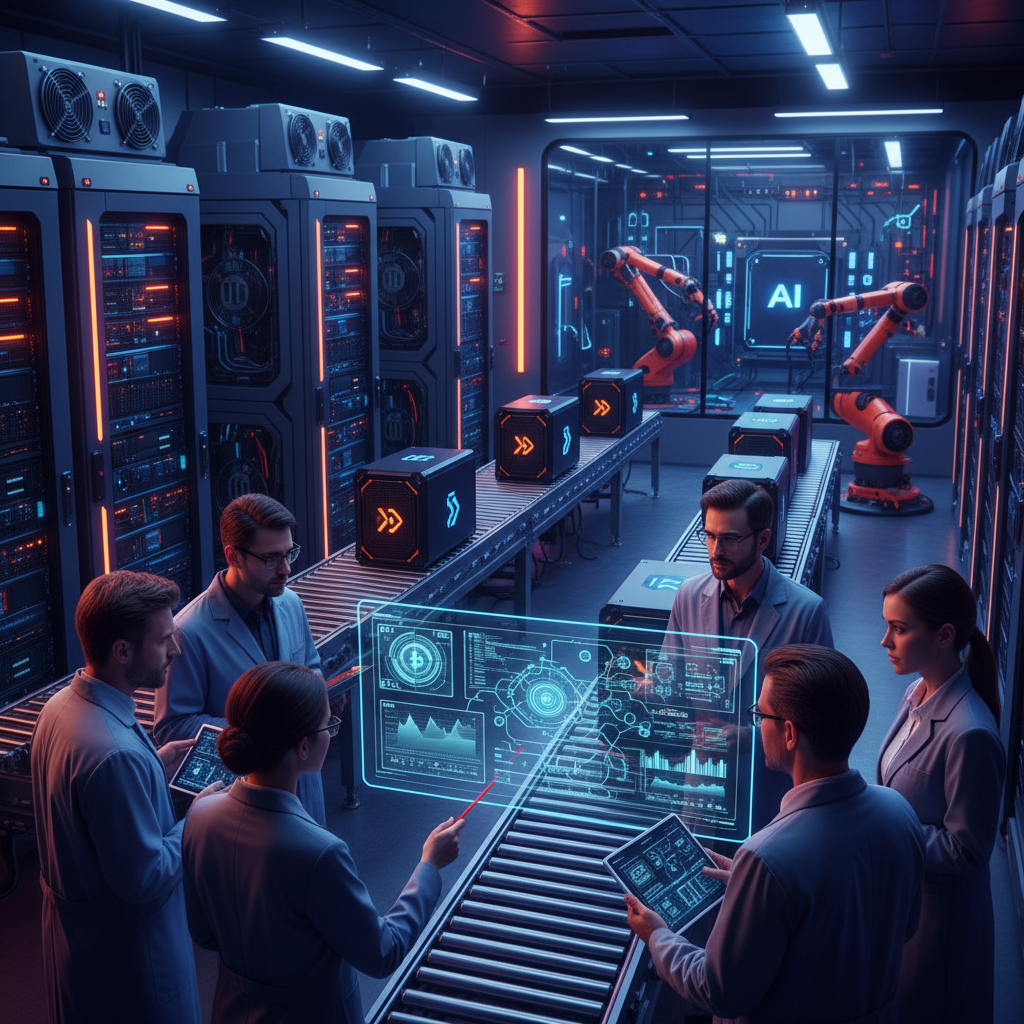
The global Bitcoin mining industry finds itself at a pivotal crossroads, as a recent downward adjustment in mining difficulty offers a fleeting respite from mounting financial pressures. This technical ease, however, belies a deeper economic strain evident in record-breaking Bitcoin sales by public miners during Q1 2026 and an accelerating strategic pivot towards Artificial Intelligence (AI) infrastructure.
On April 19, 2026, Bitcoin’s mining difficulty experienced a decrease of approximately 1.1% to 2.43%, settling around 135.59 trillion. This adjustment, which occurs roughly every two weeks, automatically recalibrates the computational effort required to mine a new Bitcoin block, making it slightly easier for miners to validate transactions and secure the network. The average hashrate, representing the total computational power dedicated to the network, has shown a slight recovery, yet remains below the 1 Zettahash per second (ZH/s) threshold it consistently held prior to March. While this dip in difficulty might appear beneficial, offering a marginal improvement in profitability for some, analysts widely anticipate a reversal, with projections indicating an increase to 137.43 trillion by the next adjustment, estimated around May 1, 2026. This signals that any relief is likely temporary, underscoring the relentless competitive nature of the mining sector.
Navigating a Shifting Profitability Landscape

Despite the temporary ease in difficulty, the underlying economic conditions for Bitcoin miners remain challenging. The sector is currently experiencing heightened financial stress, with the Miner Financial Health Index (a 7-day simple moving average) registering at 27.7%, alarmingly close to the critical 20% threshold. Historically, a drop to or below this level has often preceded market capitulation, where less efficient miners are forced to exit the market. This precarious situation is a direct consequence of several compounding factors: increased network hashrate driving up competition, the halving event in April 2024 which cut block rewards by 50%, and significant Bitcoin price corrections experienced in late 2025. The 'hashprice,' a metric indicating mining revenue per unit of computing power, has seen a modest uptick from roughly $35 to over $36 per petahash per day amidst the difficulty drop and a Bitcoin price recovery to around $78,000 in early April. However, overall profitability remains constrained, with an estimated 15% to 20% of the global mining fleet currently operating at a loss.
The Strategic Pivot: Mining Meets AI

In response to these intensifying financial pressures, publicly traded Bitcoin mining companies have dramatically altered their strategies, moving from accumulation to liquidation. A staggering volume of over 32,000 BTC was sold by these firms in the first quarter of 2026 alone. This figure surpasses the total net Bitcoin sold across all four quarters of 2025 combined, marking the largest quarterly liquidation on record. This aggressive selling highlights the urgent need for capital to cover operational expenses and debt obligations, as many struggle to maintain profitability in the current market environment.
Beyond liquidating reserves, a more profound strategic shift is underway: a significant pivot towards the Artificial Intelligence (AI) sector. Major mining companies are increasingly re-purposing their high-power data center infrastructure to host AI and High-Performance Computing (HPC) operations. This diversification is driven by the search for more stable and potentially higher-margin revenue streams. Industry executives are openly acknowledging this trend, with some viewing the diversification into AI as a substantial challenge to traditional Bitcoin mining, suggesting a re-evaluation of which use of power yields the better return. Publicly listed miners have announced substantial AI/HPC contracts, and some estimates suggest that AI-related revenue could account for up to 70% of their total revenue by the end of 2026, a significant jump from approximately 30%. Companies like Bitdeer and Core Scientific are notable examples, decommissioning Bitcoin rigs or dedicating considerable energy capacity to AI initiatives. This strategic realignment underscores the evolving economics of digital infrastructure, where the demand for powerful computing intersects with the established energy-intensive capabilities of crypto mining operations.