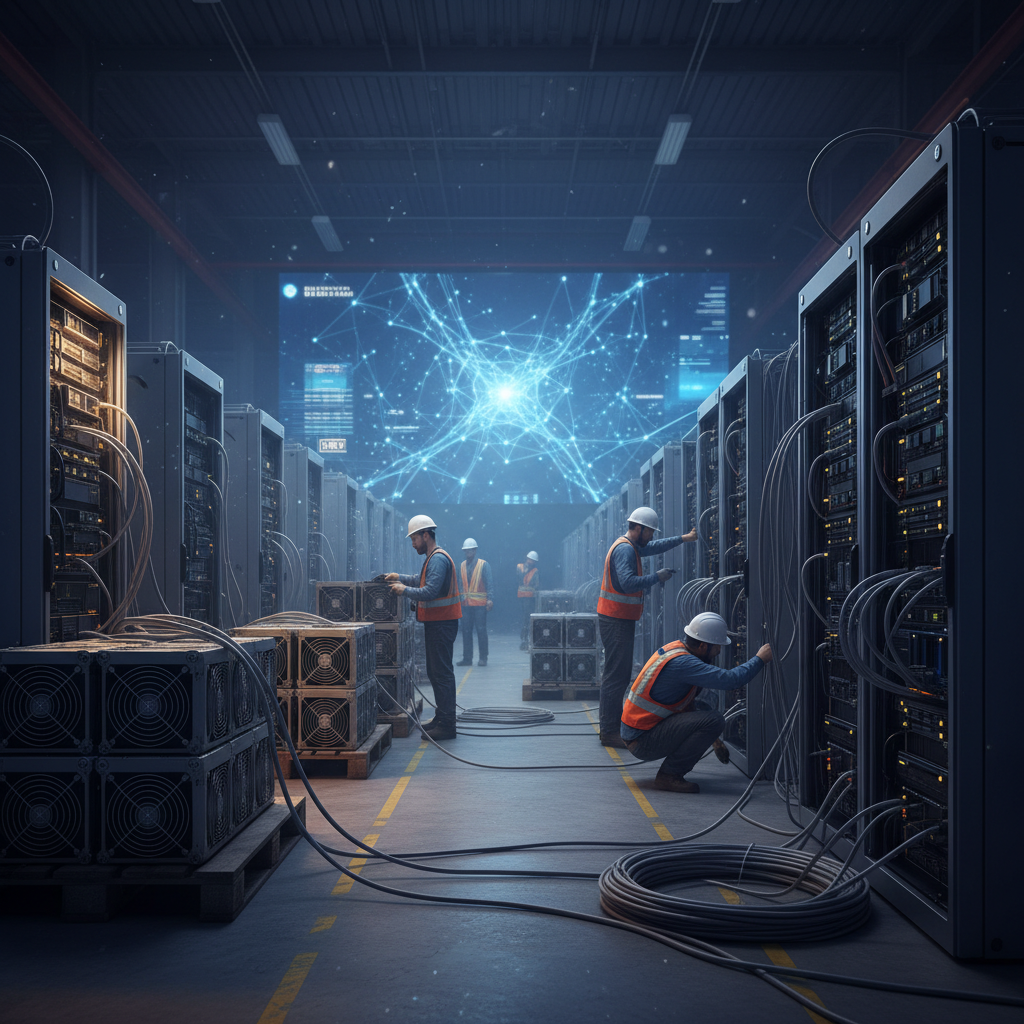
Bitcoin Miners Pivot to AI as Profit Margins Tighten Post-Halving
The global Bitcoin mining industry is undergoing a significant strategic shift, with an increasing number of publicly traded miners diversifying their operations towards Artificial Intelligence (AI) and High-Performance Computing (HPC) workloads. This pivot comes as the sector grapples with persistent challenges, including tightening profit margins, soaring operational costs, and the enduring impact of the April 2024 halving event, which drastically reduced block rewards.
Once considered a pure-play bet on Bitcoin's price appreciation, many mining companies are now actively re-evaluating their business models to ensure long-term sustainability. The high energy consumption and specialized infrastructure inherent to Bitcoin mining are proving increasingly adaptable to the demands of AI training and inference, presenting a compelling new revenue stream for operators under pressure.
The Squeeze on Bitcoin Mining Profitability
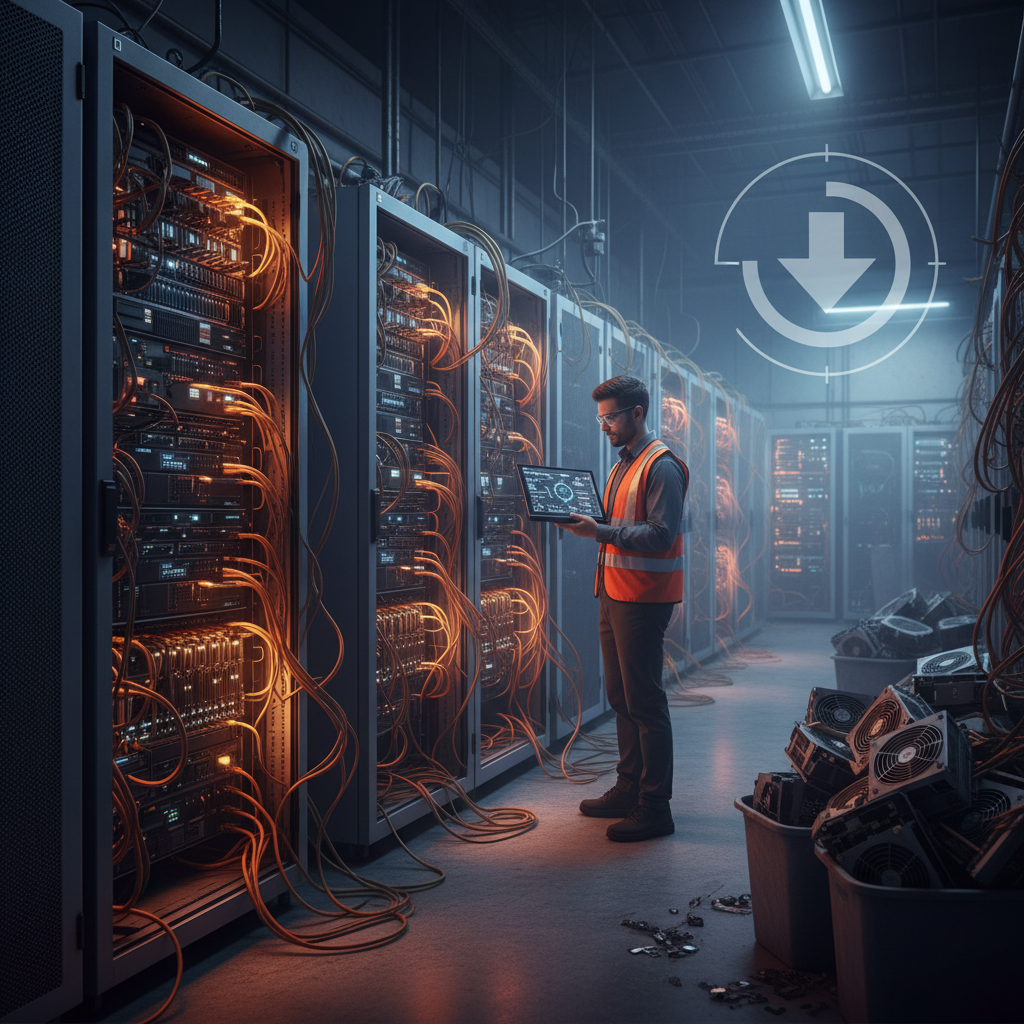
The economic landscape for Bitcoin miners has become increasingly challenging since the fourth Bitcoin halving in April 2024, which slashed the block reward from 6.25 BTC to 3.125 BTC per block. While historically halvings have been followed by periods of Bitcoin price appreciation that help offset the reduced rewards, the immediate aftermath has seen miners facing immense financial strain. Data from various sources indicates that the weighted average cost to produce one Bitcoin for publicly listed miners reached approximately $79,995 in late 2025. This figure stands in stark contrast to the hashprice — a key metric for mining revenue — which declined to roughly $28-$30 per petahash per day in early 2026.
The fundamental profitability equation for miners remains simple: revenue minus electricity costs and operational overhead. However, with electricity being the single largest ongoing expense, and network difficulty continuously rising, maintaining positive margins has become an uphill battle for many. Even with advanced, energy-efficient ASIC hardware, profitability is heavily dependent on securing electricity at competitive rates, ideally below $0.10 per kilowatt-hour (kWh). Companies without access to such low-cost energy or with less efficient hardware are finding themselves treading water or even operating at a loss.
Furthermore, the Bitcoin network's difficulty, which adjusts every 2,016 blocks (approximately every two weeks) to ensure consistent block times, has remained robust. Although a slight decrease was observed around April 18, 2026, the overall trend projects an increase by early May, signaling intensified competition for block rewards. This dynamic, coupled with transaction fees contributing very little to overall revenue currently, means miners are almost entirely reliant on the Bitcoin price and operational efficiency for survival.
The AI Imperative: A New Horizon for Miners
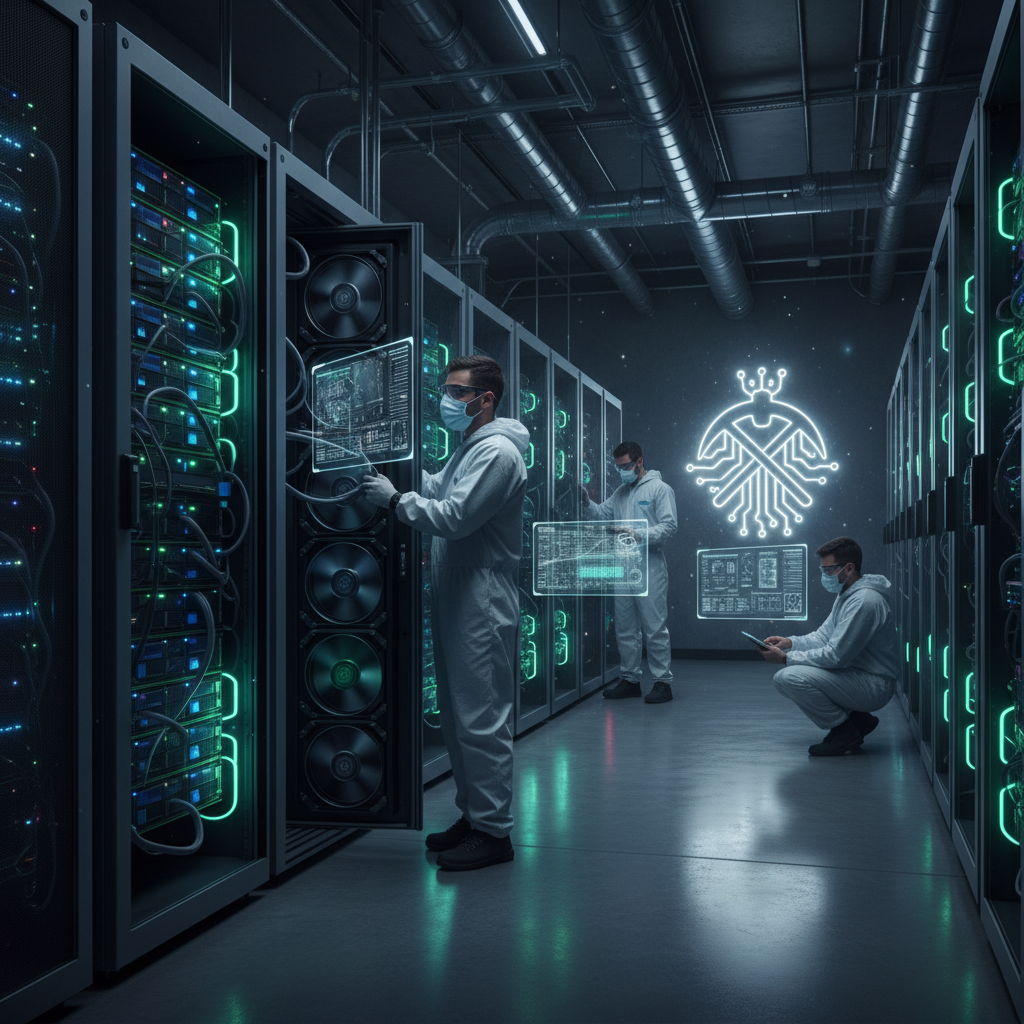
In response to these formidable headwinds, a growing number of Bitcoin mining firms are strategically diversifying their high-power data center infrastructure to accommodate AI and HPC workloads. This pivot leverages their existing investments in power infrastructure, cooling systems, and large-scale computing capabilities, allowing them to tap into a booming market with potentially higher and more stable revenue streams.
Companies like HIVE Digital Technologies are at the forefront of this trend. HIVE, founded in 2017 with a focus on green energy-powered digital asset mining, now operates Tier I and Tier III data centers across Canada, Sweden, and Paraguay that support both Bitcoin mining and GPU-based AI workloads. Frank Holmes, Co-Founder and Executive Chairman of HIVE Digital, highlighted the synergy: both Bitcoin mining and AI training convert electricity into value, but AI often generates significantly higher revenue per unit of energy. While Bitcoin mining can return capital in 1 to 3 years, AI infrastructure may take about 10 years but offers more stable, contract-based income.
Other major players are following suit. Reports indicate that public miners sold more Bitcoin in Q1 2026 than in all four quarters of 2025 combined, partly to fund these strategic shifts and cover operating expenses. This move underscores a broader re-evaluation where some miners are viewing their data centers not merely as Bitcoin production facilities, but as versatile infrastructure capable of supporting a range of compute-intensive applications. The lure of AI revenue, which for the top 10 public miners could reach up to $4.1 billion in long-term contracts, is reshaping the industry's focus.
Implications for the Industry and Beyond
This strategic pivot by Bitcoin miners towards AI has profound implications. For one, it could lead to increased industry consolidation, as smaller, less capitalized miners struggle to compete and diversify. Larger firms with the resources to invest in GPU infrastructure and secure AI contracts are better positioned to thrive in this evolving landscape.
Secondly, it raises questions about the future of Bitcoin's network security. If a significant portion of hash power shifts away from Bitcoin mining in favor of AI, it could theoretically impact the decentralization and security of the Bitcoin blockchain, although the network is designed to adapt to changes in hash rate. Conversely, it could also lead to more resilient mining operations, as diversified revenue streams make miners less susceptible to Bitcoin price volatility and halving shocks.
Ultimately, the convergence of Bitcoin mining and AI represents a maturing of the digital infrastructure sector. As companies seek to optimize their energy and hardware investments, leveraging existing assets for multiple high-demand computing tasks is a logical next step. This trend positions some Bitcoin miners less as pure cryptocurrency producers and more as adaptable, high-density data center operators, catering to the ever-growing global demand for advanced computation.