
Thai Authorities Bust Illegal Bitcoin Mining Operation Amid Soaring Energy Theft
Thai authorities have successfully dismantled a substantial illegal Bitcoin mining operation in Nan Province, uncovering an estimated power theft exceeding $80,000. The raid highlights a persistent challenge for governments globally as the energy-intensive nature of cryptocurrency mining continues to drive illicit activities and strain public infrastructure.
The illicit operation, housed within a four-story commercial building, was brought to light due to abnormally high electricity consumption that caused surrounding electrical cables to overheat and even melt. This alarming discovery prompted law enforcement and Provincial Electricity Authority officials to conduct a surprise inspection on May 17, 2026.
The Anatomy of an Illegal Operation
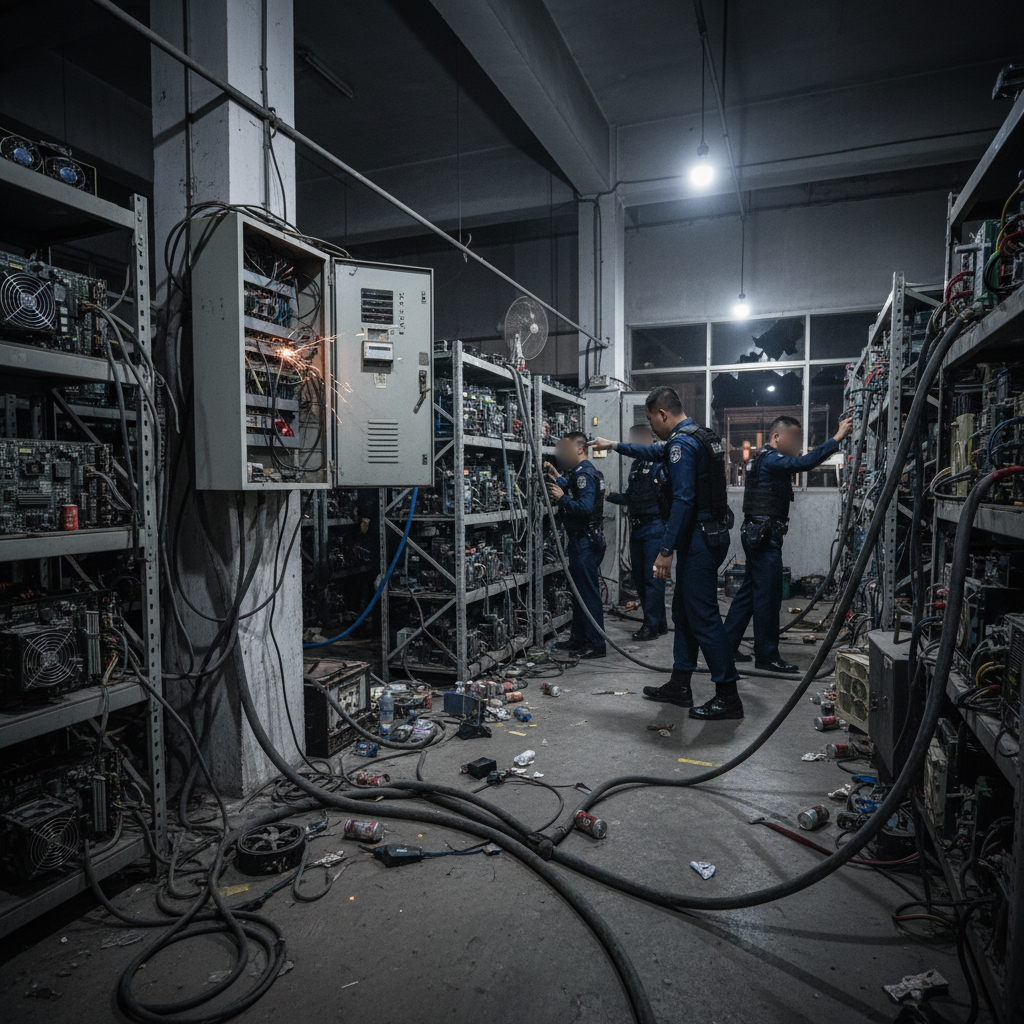
Investigators revealed that the Bitcoin miners had illegally connected to the main power grid, bypassing legitimate metering to fuel numerous mining machines located on the fourth floor of the building. The scale of the deception was stark: while the operation was consuming massive amounts of electricity, its registered monthly electricity bill amounted to a mere $11 (approximately 400 baht). This discrepancy underscored the significant financial losses incurred by utility providers.
Such illegal setups are not isolated incidents but part of a broader, escalating nationwide effort by Thai authorities to curb mining operations that deliberately circumvent the electrical grid. Beyond the financial impact, these unauthorized connections pose serious public safety risks, including fire hazards caused by overloaded and improperly wired systems that are not designed to handle industrial-scale electrical loads. The lack of regulatory oversight and proper inspection significantly elevates the potential for emergencies.
A Wider Crackdown and Global Implications
The Nan Province bust is indicative of a wider pattern of power theft across multiple Thai provinces. Recent crackdowns have seen authorities in Pathum Thani seize 63 mining rigs linked to an estimated financial loss of over $327,000 in stolen electricity. In Chon Buri, an even larger haul involved the confiscation of 996 mining rigs suspected of using tampered electricity meters. The most substantial seizure to date by the Department of Special Investigation (DSI) netted 3,642 mining rigs along with significant cash and bank deposits, underscoring the organized nature of some of these illicit ventures.
The issue of electricity theft for crypto mining is a global phenomenon. Countries worldwide are grappling with similar challenges, as the high energy demands of Bitcoin mining incentivize some operators to seek out illicit means to reduce operational costs. This often involves bypassing utility payments through illegal connections or tampering with electricity meters, leading to substantial financial losses for power companies and increased strain on national grids. For instance, Malaysia reportedly loses an estimated $177 million annually due to electricity theft linked to illegal Bitcoin mining.
Governments and law enforcement agencies are increasingly monitoring unusual energy consumption patterns to identify unauthorized activity and are stepping up enforcement. These actions are crucial not only to protect infrastructure and ensure compliance with national laws but also to address the environmental concerns associated with the vast energy consumption of proof-of-work cryptocurrencies like Bitcoin. While legitimate Bitcoin mining operations are working towards utilizing renewable energy sources, illegal operations often contribute to unchecked energy waste and carbon emissions.
The ongoing investigations in Thailand aim to assess the total financial damage and bring those responsible for the illegal mining operation to justice, sending a clear message that such activities will not be tolerated.