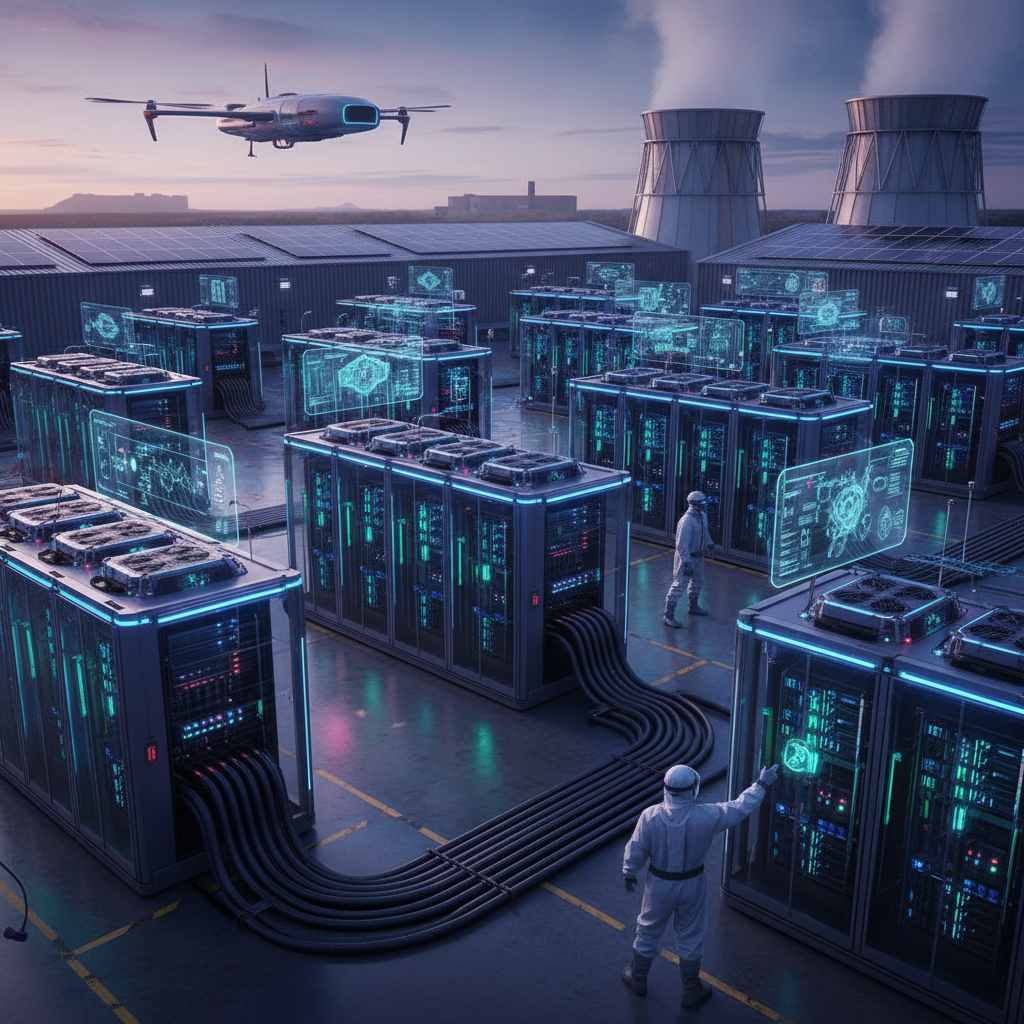
Bitcoin Miners Pivot to AI: Powering the Next Digital Frontier with $90B Deals
A significant shift is underway in the digital asset landscape, as Bitcoin mining companies are increasingly repositioning themselves as crucial infrastructure providers for the burgeoning Artificial Intelligence (AI) industry. Recent analyses highlight that these firms, traditionally focused on securing the Bitcoin network, are now leveraging their substantial power capacity and data center real estate to cater to the insatiable energy demands of AI computation, with deals totaling over $90 billion already in motion.
Investment bank Bernstein underscores this strategic pivot, noting that publicly traded Bitcoin miners in the United States collectively control more than 27 gigawatts (GW) of planned power capacity. This enormous existing infrastructure positions them uniquely to address what is fast becoming the primary bottleneck for scaling AI data centers: access to reliable, grid-connected electricity.
The Unlikely Synergy: Crypto Mining Meets AI
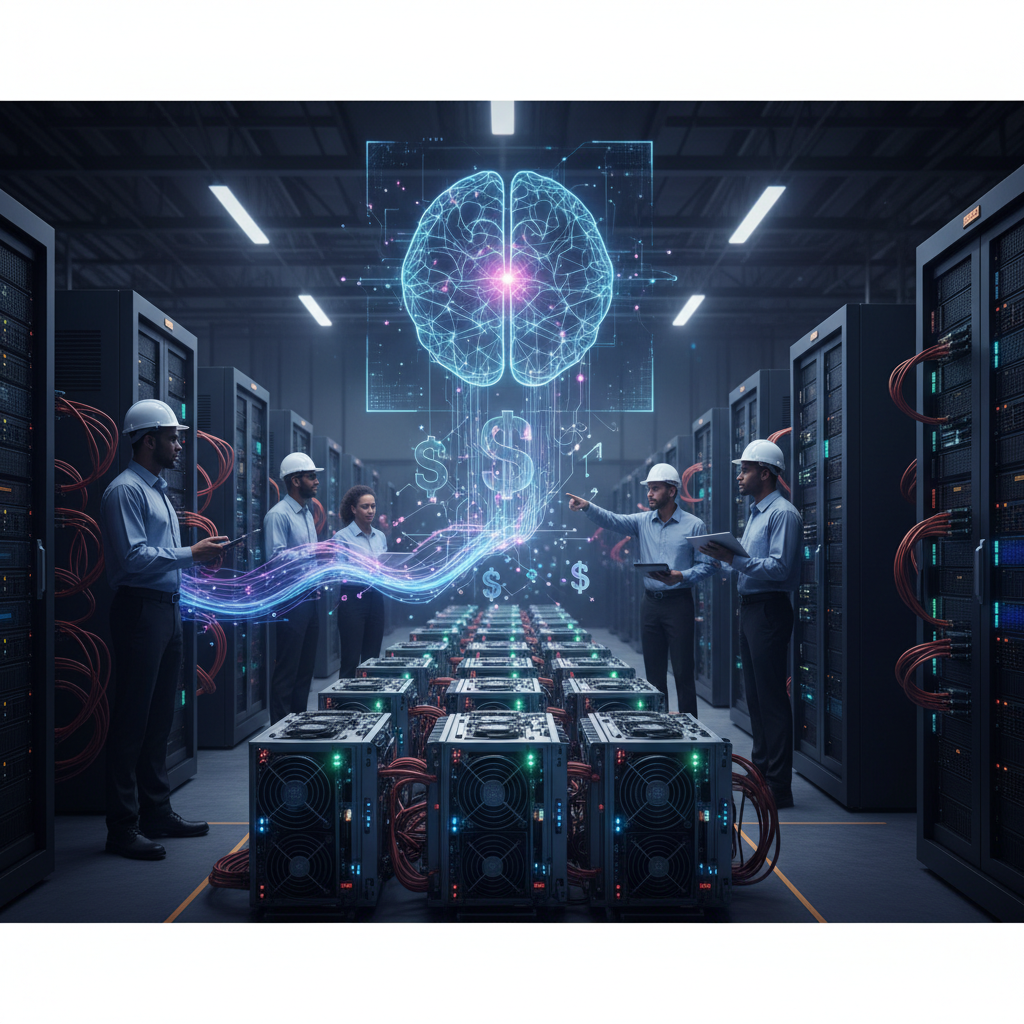
The convergence of Bitcoin mining and AI infrastructure might seem counterintuitive at first glance. Bitcoin mining is an energy-intensive process requiring specialized hardware to solve complex cryptographic puzzles and validate transactions on the blockchain. AI computing, particularly the training and deployment of large language models, similarly demands immense computational power and, consequently, vast amounts of electricity.
However, the synergy lies in the fundamental requirements both industries share: access to cheap, abundant, and often flexible energy. While AI development is soaring, securing new data center sites with sufficient power capacity faces significant hurdles. Traditional utility providers can take years to approve new grid connections, even in regions considered friendly to data center operations. Bitcoin miners, by contrast, have spent years building and optimizing grid-connected facilities, developing expertise in managing high-density computing environments and navigating energy markets.
This advantageous position has led to a re-evaluation of Bitcoin mining companies by Wall Street, where their value is increasingly seen not just in their ability to produce Bitcoin, but in their strategic control over power infrastructure. Bernstein’s research indicates that AI-related agreements signed by Bitcoin mining companies already cover approximately 3.7 GW of power capacity, amounting to over $90 billion in contract value.
Miners Diversify for Enhanced Profitability
The diversification into AI infrastructure offers Bitcoin miners a vital new revenue stream, especially in the wake of Bitcoin's halving events, which periodically reduce mining rewards and exert pressure on profit margins. By hosting AI workloads, miners can monetize their existing power infrastructure and expertise, creating a more robust and resilient business model. Companies such as IREN, Riot Platforms, CleanSpark, and Core Scientific are at the forefront of this shift, actively pursuing and securing significant AI colocation agreements.
For instance, some reports highlight companies like IREN transitioning a substantial portion of their business toward AI infrastructure through multi-billion-dollar agreements. This strategic pivot allows these firms to mitigate the inherent volatility of cryptocurrency markets by tapping into the rapidly expanding and comparatively stable demand for AI computing resources.
The Future Landscape: Power as the New Gold
The focus on power capacity as a critical asset for AI growth highlights a broader trend: in the digital age, reliable and scalable electricity is becoming as valuable as raw materials. Bitcoin miners, with their established energy connections and operational prowess in high-density computing, are uniquely positioned to bridge the gap between AI's explosive demand and the existing power grid's limitations. This evolution suggests a future where the lines between traditional digital infrastructure and crypto mining continue to blur, with miners playing an increasingly central role in powering the world’s most advanced technological innovations. The ability to manage and deploy large-scale power effectively is no longer just about mining digital gold, but about fueling the intelligence that will define the next era of technology.