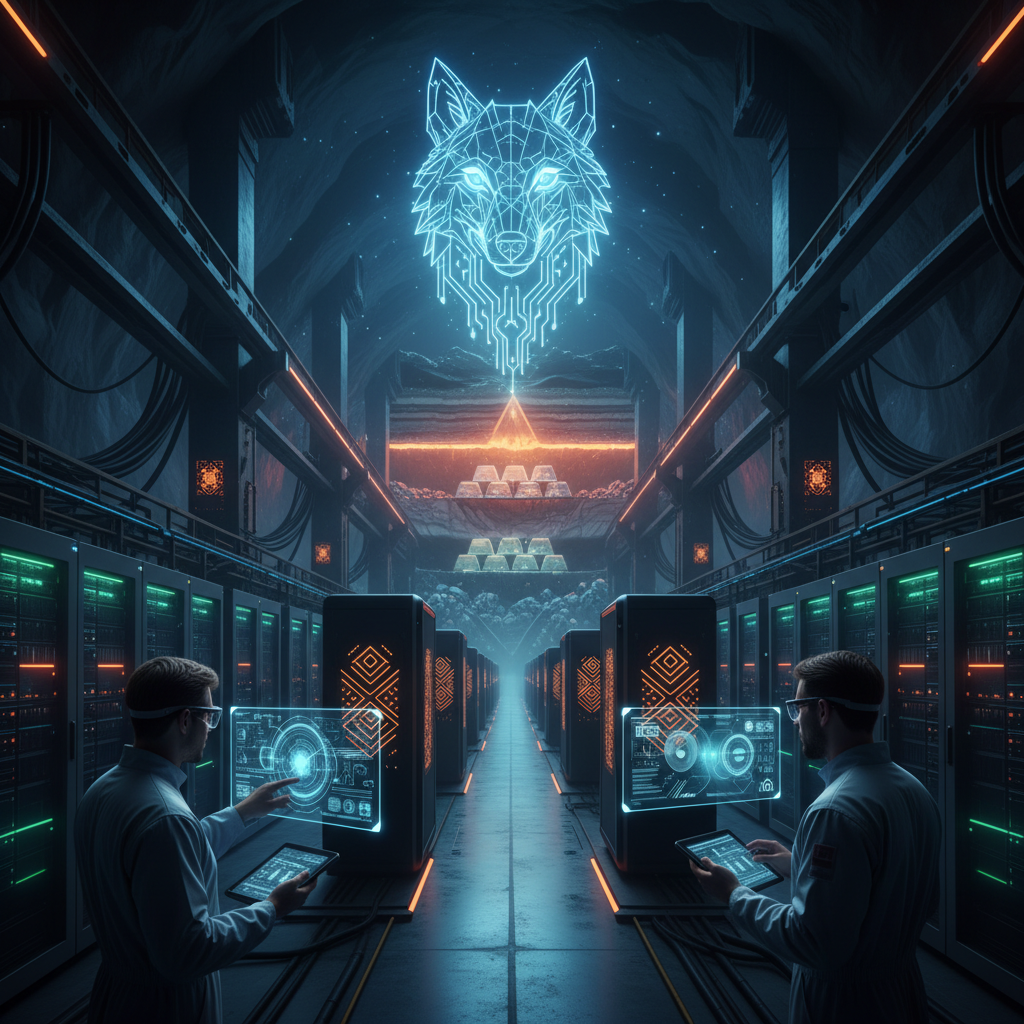
TeraWulf Bolsters Balance Sheet, Deepens AI Integration Amid Q1 2026 Results
EASTON, Md. – TeraWulf Inc. (Nasdaq: WULF), a prominent player in energy-advantaged digital infrastructure for high-performance computing (HPC) and artificial intelligence (AI), has unveiled its preliminary financial results for the first quarter ended March 31, 2026. The announcement on April 14, 2026, highlights the company's expected revenue and adjusted EBITDA, alongside a significant strengthening of its capital structure through a new revolving credit facility. These developments underscore TeraWulf's strategic evolution beyond pure Bitcoin mining into the burgeoning AI and HPC sectors, reflecting a broader trend within the digital asset mining industry.
Strategic Pivot Towards High-Performance Computing Fuels Revenue Growth

TeraWulf anticipates its first-quarter 2026 revenue to fall between $30 million and $35 million, with an adjusted EBITDA projected to be in the range of $0 million to $3 million. A crucial detail emerging from these preliminary figures is the increasing contribution of High-Performance Computing (HPC) hosting to the company's top line. Over 50% of TeraWulf's first-quarter 2026 revenue is expected to be derived from HPC hosting. This shift signals a deliberate and successful diversification strategy, as the company leverages its robust energy infrastructure for broader digital applications beyond cryptocurrency mining. The move towards HPC hosting, backed by investment-grade counterparties, aims to generate more stable and contracted revenue streams, aligning with a long-term vision of a multi-gigawatt AI data center development.
This strategic realignment is not unique to TeraWulf. The wider Bitcoin mining industry is increasingly eyeing AI and HPC as viable avenues for growth and stability. With Bitcoin mining gross margins experiencing pressure, particularly after recent halving events, the higher margins often found in AI cloud operations (mid-80s, according to some estimates) present an attractive alternative. By repurposing or expanding their infrastructure, miners can capitalize on the explosive demand for AI computing power.
Securing Capital for Future Expansion and Stability

Further solidifying its financial position, TeraWulf has received allocations for a revolving credit facility of up to $250 million. This facility, expected to mature in April 2030, will be secured by substantially all of TeraWulf's assets and those of certain subsidiaries, subject to specific exclusions. Morgan Stanley Senior Funding, Inc. is acting as the Administrative Agent, Lead Arranger, and Lead Bookrunner for this facility, indicating significant institutional confidence in TeraWulf's business model and future prospects.
The revolving credit facility is designed to enhance the company's liquidity and support its working capital needs. This financial flexibility is paramount as TeraWulf continues to execute its growth strategy, particularly in expanding its HPC and AI capabilities. Such funding is critical for companies transitioning or expanding into capital-intensive sectors like AI data centers, which require substantial upfront investments in specialized hardware, cooling systems, and infrastructure upgrades. As of March 31, 2026, TeraWulf reported cash, cash equivalents, and restricted cash of $3.1 billion, with total debt at $5.8 billion, demonstrating a balance sheet capable of supporting its ambitious plans.
The Broader Trend: Miners Embrace AI for Sustained Growth
TeraWulf's strategic maneuvers are indicative of a significant industry-wide transformation. Bitcoin miners, traditionally focused solely on validating transactions on the Bitcoin network, are increasingly looking to diversify their revenue streams. The inherent energy infrastructure and data center expertise developed for crypto mining are proving highly adaptable for HPC and AI applications. This pivot offers several advantages, including potentially higher profit margins, reduced exposure to Bitcoin price volatility, and opportunities to participate in the rapidly expanding AI market. Industry estimates suggest that AI could account for a substantial portion of combined revenue for publicly listed miners by the end of 2026.
This evolution highlights the innovative spirit within the digital infrastructure space. Companies like TeraWulf are not just passively mining Bitcoin but are actively exploring and investing in technologies that promise more resilient and diversified business models. By securing substantial financing and shifting focus towards HPC, TeraWulf is positioning itself at the forefront of this convergence, aiming to become a key infrastructure provider in the digital economy's next frontier.