Bitdeer Unveils Next-Gen Sealminer A4, Redefining Bitcoin Mining Efficiency
Singaporean technology firm Bitdeer Technologies Group has launched its new Sealminer A4 series of Bitcoin mining rigs, setting a new benchmark for energy efficiency in the competitive crypto mining sector. The flagship A4 Ultra Hydro model boasts an impressive efficiency rating of 9.45 joules per terahash (J/TH), positioning it among the most power-efficient machines available from any major manufacturer. This release comes at a crucial time for Bitcoin miners who are navigating a challenging market environment marked by fluctuating profitability and increasing operational costs.
Pushing the Boundaries of Mining Efficiency
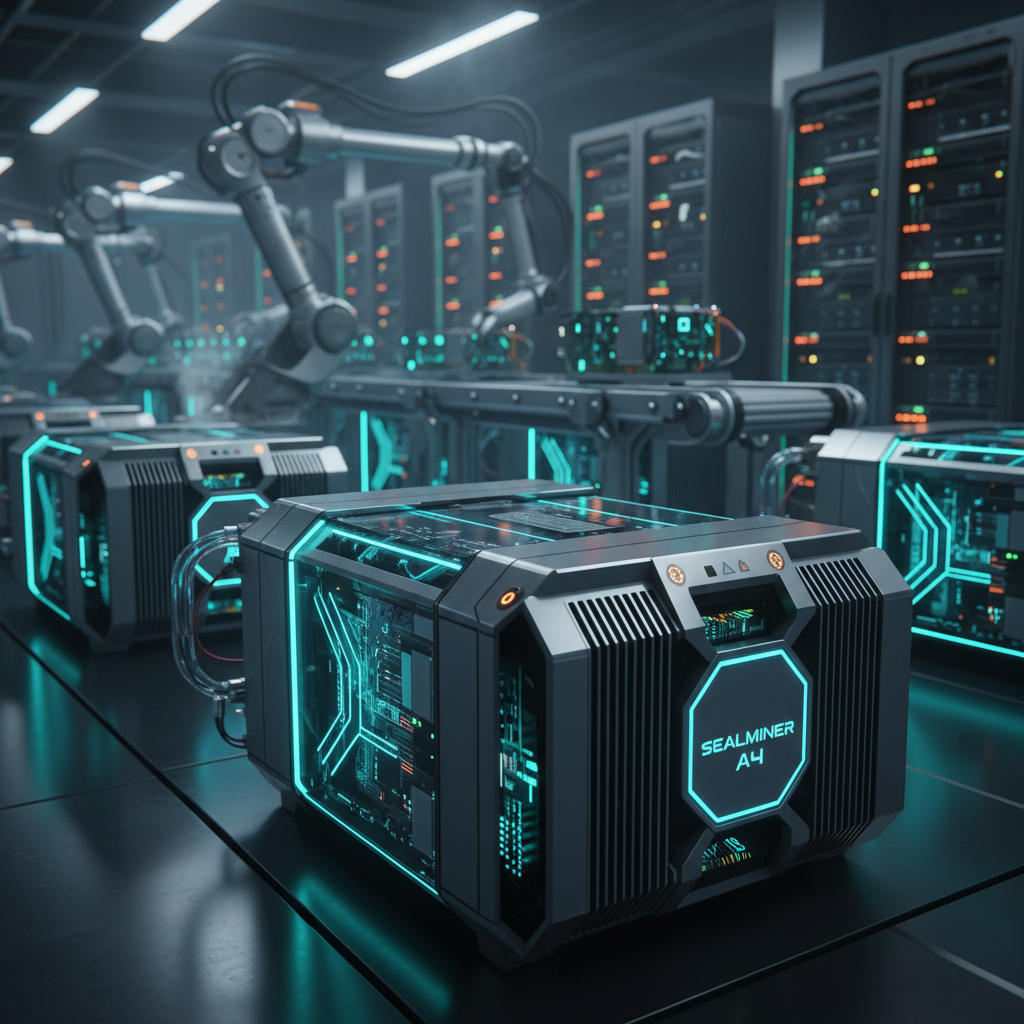
The newly introduced Sealminer A4 series, powered by Bitdeer's proprietary SEAL04 chips, represents a significant leap forward in mining hardware technology. These chips leverage advanced process nodes to optimize performance, directly addressing the industry's continuous quest for lower energy consumption per unit of computational power. The A4 series includes three distinct models tailored for various deployment conditions: the air-cooled A4 Pro Air and two hydro-cooled options, the A4 Pro Hydro and the top-tier A4 Ultra Hydro.
Specifically, the A4 Ultra Hydro delivers 886 terahashes per second (TH/s) at 8,372.7 watts, achieving its industry-leading efficiency of 9.45 J/TH. The A4 Pro Hydro and A4 Pro Air models both offer 10.9 J/TH, with hashrates of 680 TH/s and 336 TH/s respectively. This enhanced power efficiency is paramount for mining operations, as it directly translates to reduced electricity costs per Bitcoin mined. With operating margins squeezed by factors such as the Bitcoin halving event in April 2024, which slashed block rewards from 6.25 BTC to 3.125 BTC, the introduction of more efficient hardware is vital for maintaining profitability and competitiveness.
Navigating a Shifting Landscape: Profitability and AI Diversification

The launch of Bitdeer's A4 series occurs amidst a dynamic and often challenging landscape for Bitcoin miners. The first quarter of 2026 saw a notable decline in Bitcoin's hashrate, falling by 5.8% from 1066 EH/s to 1004 EH/s. This reduction was primarily attributed to the shutdown of outdated and unprofitable equipment, as experts from Hashrate Index reported. The decrease in hashprice (mining revenue per unit of hashrate), exacerbated by Bitcoin's price movements and the halving, has made it increasingly difficult for older, less efficient machines to remain operational.
In response to these economic pressures, many Bitcoin mining companies are exploring and actively pursuing diversification strategies, particularly into the artificial intelligence (AI) data center sector. The burgeoning demand for AI compute infrastructure, which requires substantial electricity and high-performance computing capabilities, presents a lucrative alternative for miners. Companies like Bitdeer, which also operates in AI and Bitcoin mining infrastructure, are well-positioned to capitalize on this trend. The revenue generated by renting infrastructure to AI firms can offer a more predictable and stable income stream compared to the volatile nature of Bitcoin mining, allowing for better forecasting of cash flows.
Despite the geographic concentration of Bitcoin's hashrate, with the United States, Russia, and China collectively accounting for approximately 65% of the global total in Q2 2026, the industry is witnessing a gradual diversification into other regions. However, the ongoing debate surrounding Bitcoin's energy consumption remains a significant point of contention. Critics, such as economist Steve Keen, continue to warn about the sustainability of Bitcoin's energy-intensive security model, suggesting potential future regulatory challenges as global energy priorities shift.
The Path Forward for Mining Innovation
The introduction of highly efficient mining hardware like the Sealminer A4 series underscores the critical role of innovation in the long-term viability of the Bitcoin mining industry. By significantly reducing operational costs, these advanced rigs enable miners to navigate periods of lower Bitcoin prices and reduced block rewards more effectively. As the industry continues to evolve, balancing profitability with energy efficiency and exploring synergistic opportunities with emerging technologies like AI will be crucial for sustainable growth and stability. The market's ability to adapt through technological advancements and strategic diversification will ultimately shape the future of crypto mining.