Bitcoin Mining Adapts Amid Rising Difficulty and Strategic AI Pivot
The landscape of Bitcoin mining continues to evolve at a rapid pace, with recent data highlighting a notable increase in mining difficulty and a strategic pivot by major industry players towards artificial intelligence (AI) infrastructure. These developments underscore the sector's ongoing adaptation to market pressures and the persistent quest for operational efficiency.
Mining Difficulty Rises as Network Stays Robust
Bitcoin's mining difficulty recently saw a significant adjustment, increasing by 3.87% to approximately 138.97 trillion (T) at block height 943,488. This recalibration, observed on April 5, 2026, reflects sustained and robust network activity, with the hash rate remaining strong enough to keep block production near its target levels of roughly ten minutes per block.
Interestingly, despite the increased difficulty, data from Glassnode indicates a positive shift in miner net positions, suggesting that Bitcoin miners are now retaining more BTC rather than immediately selling their rewards. This trend could potentially alleviate sell pressure on the cryptocurrency, offering a bullish signal for price fundamentals and broader crypto adoption. The difficulty adjustment mechanism is an intrinsic part of Bitcoin's design, ensuring network security and a consistent issuance rate of new bitcoins, regardless of the amount of computing power dedicated to mining.
Hashrate Trends and Geographic Concentration
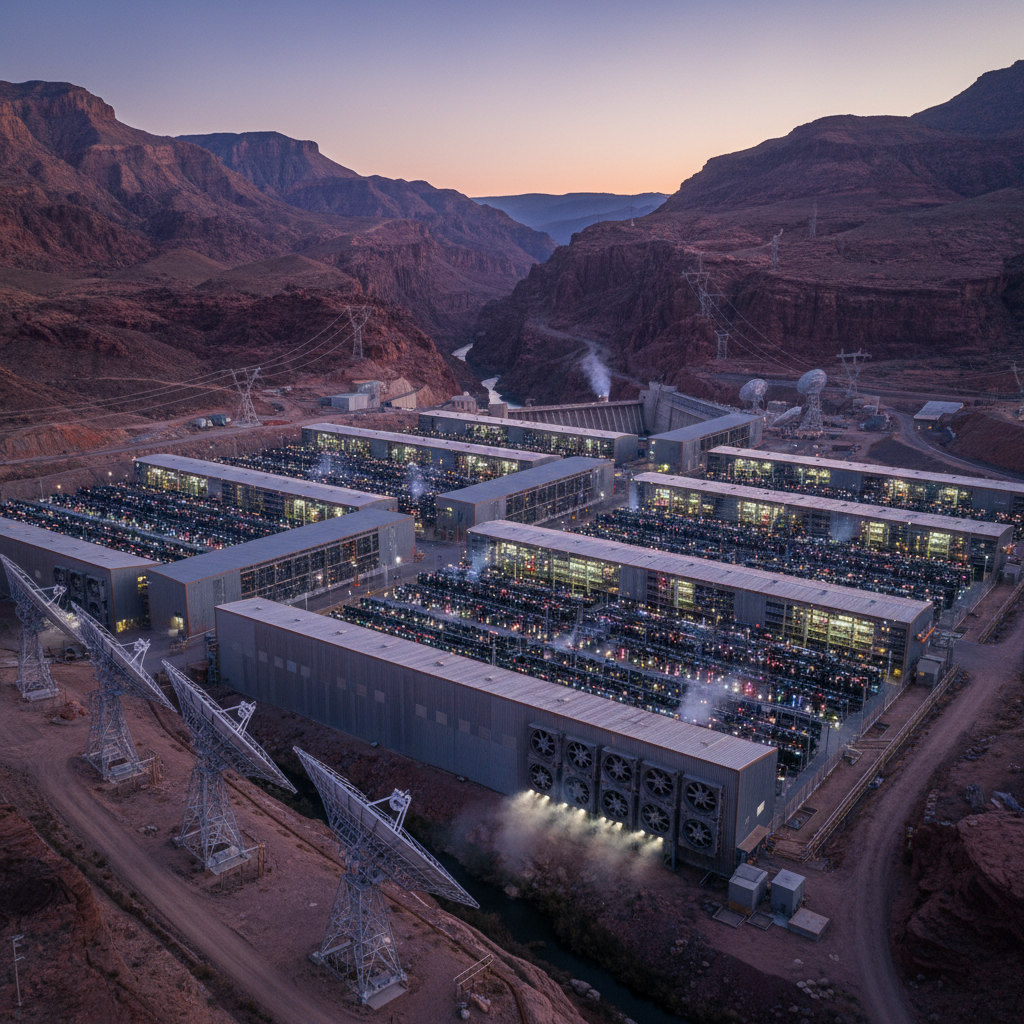
While the network's resilience is evident, the global hashrate experienced a 5.8% decline in the first quarter of 2026, dropping from 1066 Exahashes per second (EH/s) to 1004 EH/s. This reduction is largely attributed to the shutdown of older, less efficient mining equipment, which has become unprofitable amidst fluctuating market conditions and the enduring impact of the April 2024 Bitcoin halving event. The halving, which slashed block rewards from 6.25 BTC to 3.125 BTC, has intensified the need for miners to optimize their operations to maintain profitability.
A recent report by Hashrate Index also highlighted the continued geographical concentration of Bitcoin mining power. The United States maintains its lead with a 37.4% share, followed by Russia at 16.9% and China at 12%. Collectively, these three nations account for approximately 65% of the global hashrate. While some regional disruptions, such as a 77% decline in Iran's hashrate due to energy shortages and geopolitical strain, have occurred, the overall network has demonstrated its ability to absorb these shocks, with hashrate redistributing to more stable regions.
Miners Pivot Towards AI for Enhanced Profitability
In a significant strategic shift, a growing number of Bitcoin mining companies are diversifying their operations by investing heavily in AI and high-performance computing (HPC) infrastructure. This pivot is largely driven by the challenging economics of post-halving Bitcoin mining, including declining block rewards, rising energy costs, and compressed profit margins.
For instance, Soluna Holdings, a publicly traded Bitcoin mining and AI infrastructure company, recently completed a $53 million acquisition of the Briscoe Wind Farm in Texas. This renewable energy asset will power its upcoming Project Dorothy 3 AI data center campus, generating an estimated $20 million to $24.4 million in annualized revenue. This move exemplifies a broader industry trend where miners are leveraging their existing power infrastructure and expertise in managing vast computational resources to capitalize on the burgeoning demand for AI computing.
Similarly, Cango Inc., another prominent Bitcoin miner, announced its operational update for March 2026, detailing strategic optimizations to prioritize cash margin over sheer scale. The company is actively refining its mining fleet, decommissioning inefficient machines, and deploying more energy-efficient models like the S21/S21XP series in regions with higher power costs. These efforts led to a substantial 19.3% reduction in Cango's average cash cost per coin, bringing it down to $68,215.83 in March 2026 compared to Q4 2025. AVAX One Technology also announced plans to develop a 10MW AI/HPC Micro-Grid Data Center in Alberta, alongside acquiring new ASIC mining machines, showcasing a dual-strategy approach.
This diversification into AI not only offers a new revenue stream but also helps mining companies mitigate risks associated with the volatile crypto market. By doing so, they aim to secure their long-term financial health and operational stability in an increasingly competitive environment. The industry's evolution showcases a clear trend: to thrive, miners must innovate beyond pure Bitcoin production, embracing efficiency and new technological applications.