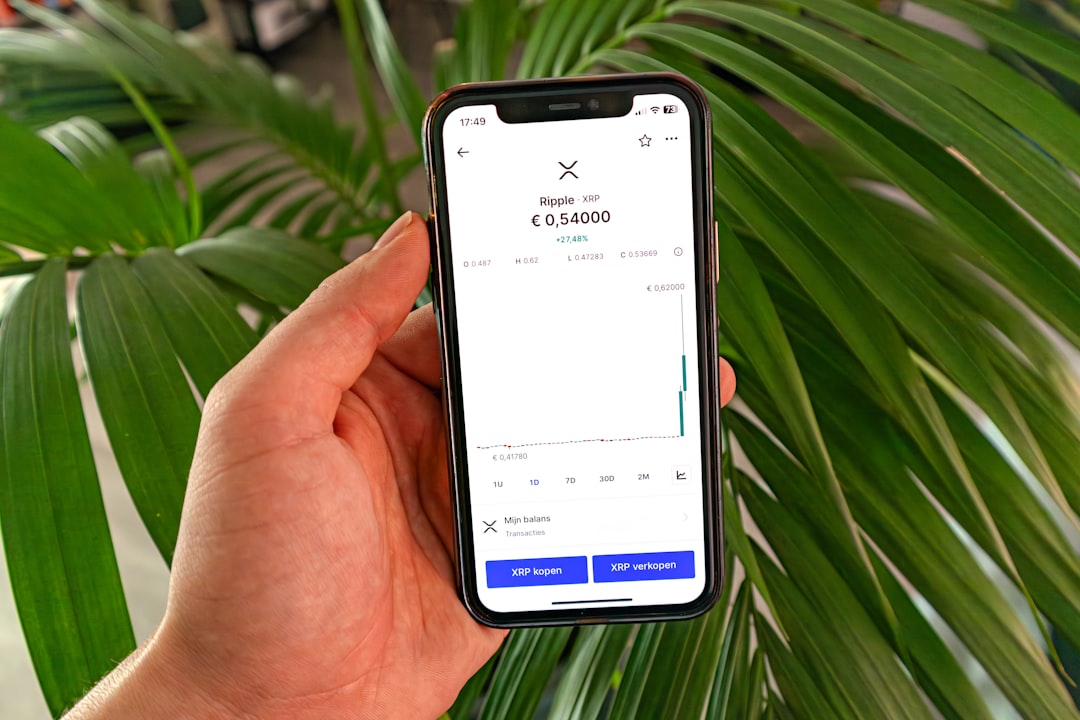
XRP Ledger Boosts Institutional Privacy with ZK-Proofs, Gains Major Retail Adoption
The XRP Ledger (XRPL) has taken a significant leap forward in addressing the critical need for privacy in institutional decentralized finance by integrating Zero-Knowledge Proofs (ZK-Proofs) through its partnership with Boundless. This development, confirmed on April 14, 2026, positions XRPL as an even more attractive platform for financial institutions seeking to leverage blockchain technology while maintaining confidentiality. Concurrently, XRP's utility is set for a massive expansion with Japanese e-commerce giant Rakuten announcing that it will enable XRP payments for its vast network of 44 million customers.
Revolutionizing Institutional Privacy with ZK-Proofs
The integration of ZK-Proofs via Boundless marks a pivotal moment for the XRP Ledger, enabling what are being termed 'invisible' transactions on its public blockchain. For regulated financial entities, the inherent transparency of public ledgers can pose a significant challenge, as details like transaction sizes, counterparties, and treasury positions are typically exposed. This level of disclosure often presents competitive risks and compliance hurdles for banks and funds engaged in cross-border payments or managing over-the-counter (OTC) positions.
Zero-Knowledge Proofs offer a cryptographic solution by allowing one party to prove the truth of a statement to another without revealing any underlying data. This is akin to a bank verifying an individual's loan eligibility without disclosing their income or debt details. On the XRPL, this technology now means that a payment can be validated as legitimate and compliant without exposing the sensitive information of the sender, recipient, or transaction amount.
The move directly responds to the growing demand for privacy within the burgeoning real-world asset (RWA) tokenization sector. With the total value of tokenized U.S. Treasuries alone nearing $14 billion and the broader RWA market reaching $29.22 billion in April 2026, privacy is rapidly transitioning from a desirable feature to a fundamental requirement for public blockchains aiming to attract regulated capital. XRPL, which already boasts institutional users like SBI Holdings in Japan, Zand Bank in the UAE, Archax in the U.K., and Guggenheim Treasury Services in the U.S., has now fortified its offering for these key players. Over $550 million has reportedly been deployed into XRPL ecosystem initiatives, underscoring its existing institutional traction.
Beyond current utility, ZK-Proofs also offer a strategic advantage in the long term. These cryptographic methods employ mathematical foundations that differ from the elliptic curve cryptography currently susceptible to potential threats from quantum computing. This positions XRPL with enhanced resilience against future quantum-related security challenges, providing a forward-looking security model. While competing solutions, such as zkSync's Prividium on Ethereum Layer 2 networks, offer similar privacy features, they often require institutions to launch their own Layer 2s, incurring additional costs and operational overhead. Boundless, however, integrates directly on the Layer 1 via smart contracts, streamlining the process for institutional adoption.
Rakuten Partnership Signals Mass Consumer Adoption

In parallel to its advancements in institutional privacy, the XRP ecosystem is set for a massive surge in consumer utility. Japanese e-commerce and internet services giant Rakuten has announced plans to enable XRP as a payment method for its extensive user base of 44 million customers. This integration, reported on April 14, 2026, is a monumental step in expanding XRP’s real-world application beyond its traditional cross-border payments focus.
Rakuten's decision to embrace XRP as a payment option highlights a broader trend of convergence between traditional finance, e-commerce, and digital assets. For XRP, this means direct exposure to millions of consumers in one of the world's leading economies, potentially driving significant transaction volume and increasing its utility as a medium of exchange. Such a high-profile partnership not only validates XRP's efficiency and low transaction costs but also sets a precedent for other global e-commerce platforms considering similar integrations.
XRP's Evolving Utility and Market Impact
These dual developments — a sophisticated privacy solution for institutions and a widespread consumer adoption partnership — underscore XRP's evolving role in the digital asset landscape. The ability to cater to both stringent institutional requirements for privacy and the expansive transactional needs of retail consumers positions XRP uniquely in the market. As institutional capital continues to flow into the digital asset space, demanding robust, compliant, and private solutions, XRPL's ZK-Proof integration directly addresses these needs. Concurrently, the Rakuten partnership showcases a tangible pathway for altcoins to achieve mass adoption in everyday commerce, moving beyond speculative trading to genuine utility.
Together, these recent announcements paint a picture of an XRP Ledger growing in both sophistication and reach, solidifying its foundational layer status for a diverse array of financial and commercial applications.