
SEC Clarifies Crypto UI Rules, Eyes 'Innovation Exemption' for Tokenized Assets
In a significant move to provide regulatory clarity for the burgeoning crypto sector, the U.S. Securities and Exchange Commission (SEC) has issued new guidance regarding broker-dealer registration for providers of crypto asset user interfaces. Concurrently, the commission is actively exploring an “innovation exemption” to foster the trading of tokenized securities, signaling a nuanced approach to integrating digital assets into traditional financial frameworks.
Defining the Boundaries for Crypto User Interfaces

On April 13, 2026, the SEC's Division of Trading and Markets released a staff statement outlining specific conditions under which certain crypto asset user interface providers may operate without needing to register as broker-dealers under the Securities Exchange Act of 1934. This guidance is particularly relevant for decentralized finance (DeFi) participants and technology firms building user-friendly gateways to the crypto economy.
The statement focuses on “Covered User Interface Providers” – entities that develop and offer software interfaces like websites, browser extensions, or mobile applications designed to help users initiate and submit transactions in crypto asset securities through their own self-custodial wallets. Crucially, these providers must remain non-custodial, meaning they do not hold or control users' assets.
To qualify for this exemption, providers must adhere to several strict conditions. These include enabling users to customize transaction parameters, offering access to more than one independent trading venue, and critically, refraining from providing investment recommendations or actively soliciting transactions. The objective is to differentiate between mere technological infrastructure providers and those engaging in activities traditionally associated with broker-dealers, which would necessitate registration.
Commissioner Hester Peirce, a long-standing advocate for clearer crypto regulation, welcomed the staff’s clarification. However, in a separate statement, she emphasized the need for a more enduring regulatory solution beyond temporary staff guidance. Peirce noted that self-custody wallets and interfaces should not be deemed “brokers” simply for enabling users to create or control wallets, transmit instructions to a blockchain, or display on-chain data. Her remarks underscore the ongoing tension between applying existing regulatory frameworks to novel technologies and the call for bespoke, innovation-friendly legislation.
Advancing Tokenization: An 'Innovation Exemption' and NYSE Initiative
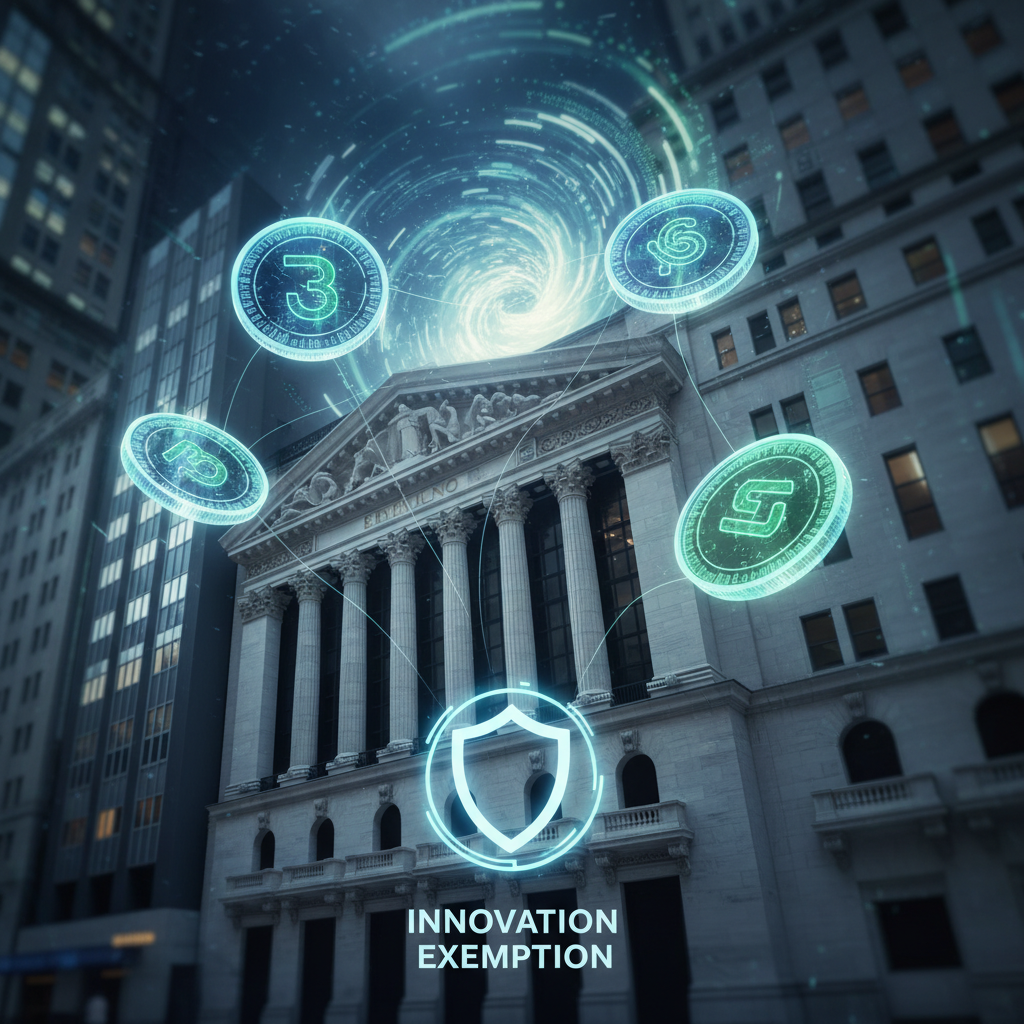
Beyond clarifying the regulatory perimeter for user interfaces, the SEC is also making strides in its broader initiative to facilitate the tokenization of securities. Jamie Selway, Director of the SEC’s Division of Trading and Markets, indicated on April 13, 2026, that the Division is actively preparing an “innovation exemption” recommendation for the Commission. This proposed exemption aims to permit certain trading venues to trade tokenized securities, inviting feedback from market participants to shape its development.
This initiative aligns with the Depository Trust Company's (DTC) three-year pilot program for tokenizing securities, for which the SEC has already issued a no-action letter. The goal is to integrate the benefits of blockchain technology, such as increased efficiency and transparency, into the trading of traditional financial instruments, while ensuring adequate investor protection.
Further demonstrating this momentum, the New York Stock Exchange (NYSE) filed a proposed rule change with the SEC on April 9, 2026. This filing seeks to enable the trading of tokenized securities on the NYSE during the DTC’s tokenization pilot program. The proposal is subject to the same conditions and restrictions as a recently approved Nasdaq rule change, indicating a concerted effort across major exchanges to explore and adapt to this technological shift.
Implications for the Global Crypto Landscape
These recent actions by the SEC highlight a maturing regulatory approach in the United States, moving beyond broad enforcement actions to more granular guidance and proactive frameworks for new market structures. While the U.S. continues to develop its regulatory stance, international bodies like the Organization for Economic Co-operation and Development (OECD) are reportedly awaiting U.S. Treasury's crypto regulations before finalizing their own Crypto-Asset Reporting Framework, underscoring the global interconnectedness of these policy decisions.
For crypto firms globally, especially those operating or looking to operate in the U.S. market, these developments provide crucial insights. The differentiation between technology providers and regulated financial intermediaries, coupled with a pathway for tokenized securities, suggests a future where innovative blockchain applications can thrive under clearer, albeit still evolving, regulatory oversight. The emphasis on self-custody and user control in the interface guidance, alongside efforts to integrate tokenization into established exchanges, paints a picture of a regulated yet dynamic digital asset ecosystem taking shape.