Bitcoin Holds Ground Amidst Shifting Market Dynamics and Geopolitical Tensions
The cryptocurrency market, particularly Bitcoin (BTC), is navigating a complex landscape in early April 2026, characterized by remarkable price resilience despite geopolitical uncertainties and a notable divergence in investor behavior. While the flagship digital asset has largely remained range-bound, technical indicators and on-chain data reveal a market in a 'pause phase,' grappling with mixed signals from institutional movements, retail sentiment, and the elusive 'altcoin season'.
Institutional Accumulation Meets Retail Caution

Recent market analysis highlights a significant shift in Bitcoin's ownership structure. Data from the first quarter of 2026 indicates that retail investors have been actively selling off their BTC holdings, divesting approximately 62,000 BTC. In stark contrast, corporate and institutional investors have capitalized on price dips, purchasing a substantial 69,000 BTC during the same period. This suggests a sustained pattern of large institutional capital 'quietly accumulating' positions, particularly in the $66,000 to $68,000 range, which has proven to be a solid support level for Bitcoin from late March to early April 2026.
This institutional absorption appears to be a key factor underpinning Bitcoin's relative stability, even as the broader speculative crowd that previously wagered on significant upside has largely vanished. However, not all large holders are in accumulation mode. Some on-chain metrics point to a weakening conviction among long-term holders, with a significant reduction in whale-tier wallets observed since mid-March 2026. This distribution by larger entities could thin out the concentrated buying power typically needed to trigger significant breakouts.
Navigating Sentiment and Technical Crosscurrents

Market sentiment, as measured by the Crypto Fear & Greed Index, has seen considerable fluctuations. After plummeting to an 'extreme fear' reading of 8 out of 100 on April 2, a level not witnessed since the Terra-Luna collapse of June 2022, the index showed a recovery to 63 ('Greed') by April 6. This rapid swing reflects heightened volatility and investor reactivity to ongoing global events, particularly developments concerning the US-Iran conflict, which has introduced significant geopolitical uncertainty.
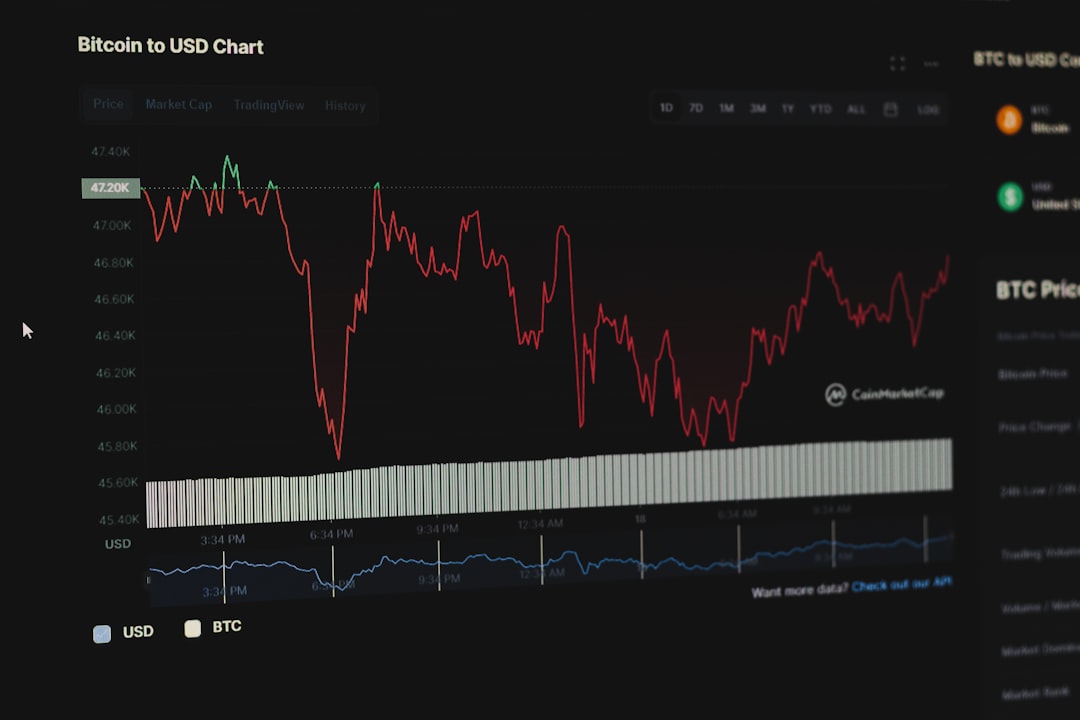
Technically, Bitcoin has been trading in a relatively tight range, oscillating between approximately $67,000 and $78,000 for April 2026. Analysts describe this period as a 'pause phase,' lacking a clear uptrend or downtrend. Despite several bullish divergences spotted on the 8-hour chart since March 31, 2026, rallies have repeatedly stalled below the $69,182-$70,000 zone. Key technical support levels are identified around $67,000 and $66,624, with a critical floor at $60,000. A sustained break below these levels, especially $60,000, could signal further downside, while reclaiming and holding above $75,900 would be a bullish sign.
The Elusive Altcoin Season and Future Outlook
While some pockets of the altcoin market have shown individual strength, a broad 'altcoin season' remains unconfirmed. The Altcoin Season Index continues to hover in 'Bitcoin season' territory (around 27-38 as of early April 2026), with Bitcoin dominance firmly above 50% (56-60%). This indicates that capital rotation is still favoring Bitcoin as a relative safe haven, a pattern that typically intensifies during episodes of extreme fear before reversing when risk appetite returns.
Despite some analysts predicting that altcoins will outperform Bitcoin in 2026, current market metrics, including weak sentiment and Bitcoin's sustained dominance, suggest such a season is not yet imminent. However, the long-term outlook for the overall crypto market remains cautiously constructive, particularly with anticipated regulatory clarity, such as the potential movement of the CLARITY Act, which could significantly reprice the entire altcoin complex. For now, Bitcoin continues to be the anchor, exhibiting resilience amidst a complex interplay of institutional interest, cautious retail behavior, and sensitive geopolitical factors, dictating a landscape where patience and data-driven analysis remain paramount.