
Mantle Network Revolutionizes TradFi Access with Tokenized Equities
In a significant stride towards bridging traditional finance (TradFi) with the burgeoning decentralized ecosystem, Mantle, a prominent Ethereum Layer 2 (L2) network, has announced the live integration of tokenized equities, known as xStocks. This groundbreaking development, made in collaboration with industry giants Bybit, BackedFi, and Flowdesk, positions Mantle as one of the first Ethereum L2s to facilitate 24/7 global on-chain trading of leading public equities.
The integration, unveiled on April 10, 2026, marks a pivotal moment for Real-World Assets (RWAs) on the blockchain. It allows users to trade tokenized tracker certificates that provide direct on-chain exposure to top public company stocks, such as TSLAx, NVDAx, AAPLx, METAx, and GOOGLx, through Fluxion, Mantle's native decentralized exchange (DEX). This move is set to dramatically enhance liquidity and accessibility for a global investor base, transcending traditional market hours and geographical limitations.
Bridging Traditional Finance and Decentralized Markets
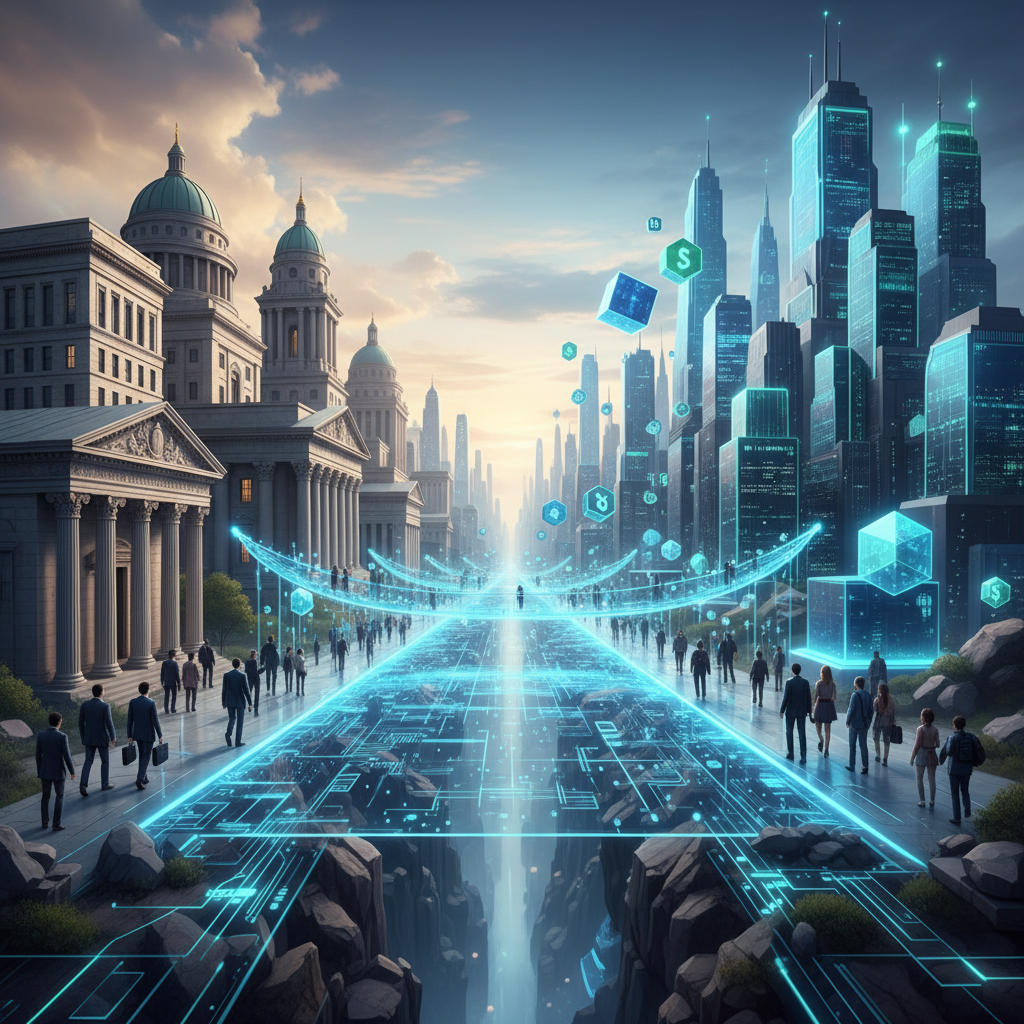
The concept of tokenized equities, as implemented by xStocks, involves creating digital representations of traditional securities on a blockchain. These xStocks are fully collateralized by their underlying real-world securities and adhere to compliance standards under the Swiss DLT Act, ensuring a robust and regulated framework for their on-chain existence. This fusion offers the best of both worlds: the regulatory clarity and stability of conventional financial instruments combined with the transparency, efficiency, and composability of blockchain technology.
For the uninitiated, an Ethereum Layer 2 network like Mantle operates atop the main Ethereum blockchain (Layer 1). Its primary purpose is to enhance scalability and reduce transaction costs, often referred to as 'gas fees,' by processing transactions off the main chain and periodically submitting aggregated proofs back to Ethereum. This architecture makes it economically feasible to handle high-frequency trading activities, which would otherwise be prohibitively expensive on the Ethereum mainnet. Mantle's institutional-grade infrastructure is designed to provide the necessary performance and compliance-friendly environment for the widespread distribution of tokenized assets.
Implications for the RWA Landscape and DeFi

Mantle's initiative to bring tokenized equities on-chain through xStocks is a powerful validation of the growing Real-World Assets (RWA) narrative within the crypto space. RWAs refer to tangible assets—from real estate and commodities to financial instruments like stocks and bonds—that are tokenized and brought onto a blockchain. This enables fractional ownership, increased liquidity, and broader access for investors worldwide.
The integration on Fluxion, Mantle's DEX, utilizes a hybrid Automated Market Maker (AMM) and Request for Quote (RFQ) infrastructure. This sophisticated setup is crucial for ensuring institutional-grade precision in trading and minimizing slippage, which is the difference between the expected price of a trade and the price at which the trade is actually executed. Such features are vital for attracting and retaining professional traders and large-scale investors who demand reliability and efficiency comparable to traditional financial exchanges.
Moreover, the composability of xStocks within Mantle's ecosystem—boasting over 200 partner protocols—opens up a myriad of possibilities for decentralized finance (DeFi) innovation. Developers and protocols can now design capital-efficient strategies around these tokenized equities, leveraging deep on-chain liquidity. This could lead to novel lending platforms, synthetic asset creation, and other financial products that blend the strengths of traditional markets with the dynamism of DeFi, further blurring the lines between these two financial paradigms.
By pioneering such integrations, Mantle reinforces its strategic vision to serve as a leading RWA chain, connecting global liquidity pools and facilitating seamless interaction between TradFi and DeFi. This development is not just about trading stocks on a blockchain; it's about setting a precedent for how regulated, real-world assets can be integrated into decentralized networks, promising a more inclusive, efficient, and interconnected global financial system.