Ethereum Records Historic Transaction Surge in Q1 2026, Driven by Layer 2 Adoption
Ethereum, the world's leading smart contract platform, has kicked off 2026 with an unprecedented surge in network activity, processing over 200 million transactions in the first quarter. This remarkable milestone represents the highest quarterly transaction volume in the network's history, signaling robust underlying growth and a significant shift towards utility-driven adoption within its expansive ecosystem.
According to data from market analysts, the Q1 2026 transaction count marks a substantial 43% increase compared to the 145 million transactions recorded in the fourth quarter of 2025. This acceleration in activity stands as a testament to Ethereum's evolving infrastructure and its increasing role as a foundational layer for decentralized applications (dApps) globally.
Layer 2 Solutions and Stablecoins Fuel Growth
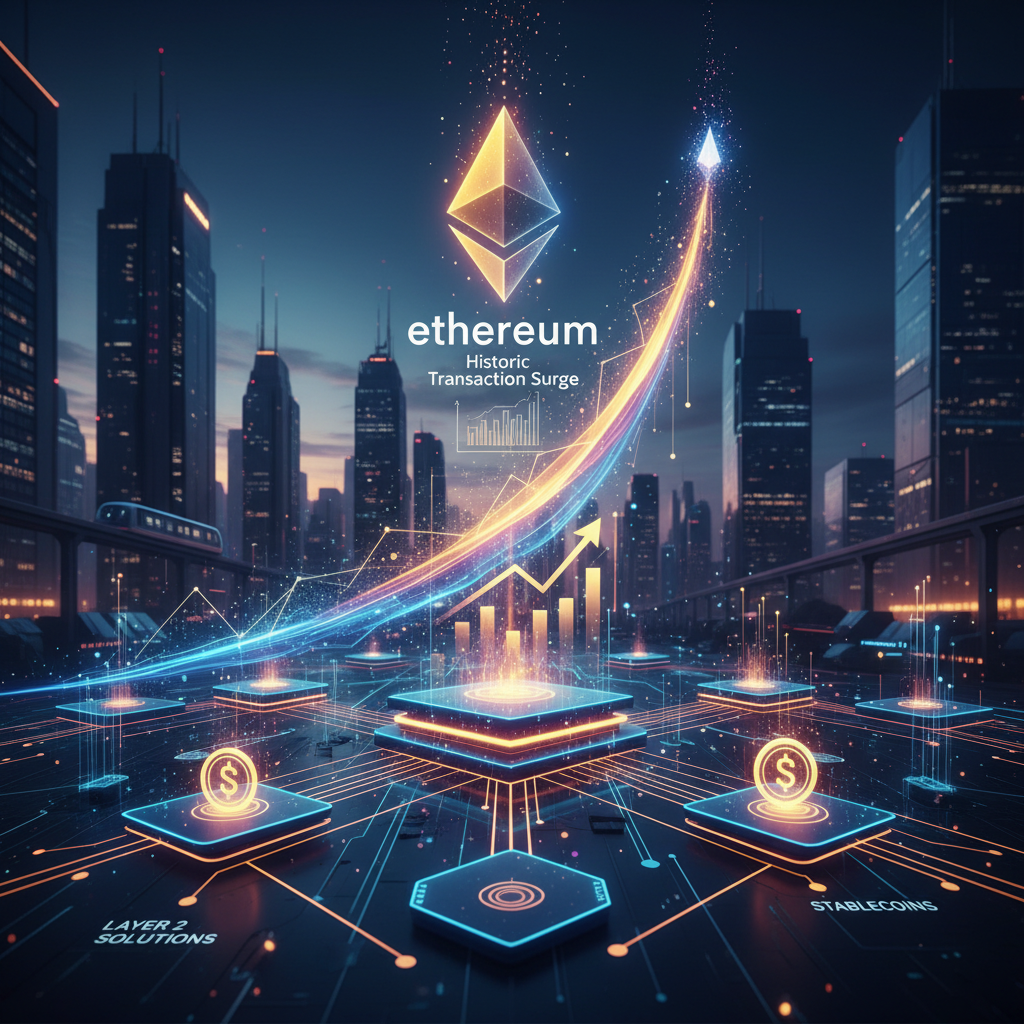
The primary catalysts behind this historic transaction surge are the continued maturation and widespread adoption of Layer 2 (L2) scaling solutions and the burgeoning stablecoin ecosystem. Layer 2 networks such as Arbitrum, Optimism, and Base have played a pivotal role by processing a significant volume of transactions off the main Ethereum chain, thereby reducing costs and improving transaction speeds for users. These solutions then batch and settle these transactions securely on the Ethereum mainnet, effectively enhancing its overall throughput without compromising decentralization or security.
The efficiency gains from Layer 2s have unlocked new segments of users and enabled a broader range of applications that require frequent, low-cost interactions. This has directly contributed to the exponential increase in the overall transaction count. Furthermore, the successful implementation of the Dencun upgrade earlier in the year significantly reduced data availability costs for Layer 2 networks, further incentivizing their use and mitigating direct fee pressure on the Ethereum mainnet.
In parallel, stablecoins have emerged as a powerhouse on Ethereum, with their total supply on the blockchain swelling to approximately $180 billion during Q1 2026. This figure represents a staggering 60% of the global stablecoin market, underscoring Ethereum's indispensable position in facilitating decentralized finance (DeFi), payments, and remittance flows worldwide. The continuous activity generated by stablecoin transfers and DeFi protocols built atop Ethereum further solidifies its utility and real-world application.
A Divergence Between Usage and Market Value

Despite this impressive on-chain activity, the price of Ether (ETH) has not seen a proportional rally, trading consistently around the $2,350 to $2,400 mark. This divergence between strengthening network fundamentals and stagnant market valuation has caught the attention of analysts. Some market observers interpret this gap as a potential indicator of a delayed pricing response, suggesting that sustained on-chain expansion historically precedes broader price recoveries in the crypto markets.
Historically, Ethereum's quarterly transaction volume experienced a low of around 90 million in 2023, stabilizing between 100 million and 120 million throughout 2024. The consistent upward trajectory, culminating in the Q1 2026 record, reflects a resilient ecosystem that is increasingly driven by genuine economic demand and application utility rather than speculative hype.
This sustained growth trajectory points towards Ethereum’s vision of becoming a modular blockchain architecture, where the Layer 1 provides robust security and settlement, while execution is scaled efficiently across various Layer 2 solutions. This design approach enables greater throughput and better user experiences, paving the way for wider mainstream adoption of decentralized technologies. As Ethereum continues to refine its scaling solutions and enhance its core protocol, its role as the backbone of the decentralized web appears set to grow, promising further innovation and utility in the digital economy. The ongoing engagement from developers, traders, and everyday users indicates a healthy and expanding ecosystem, poised for long-term stability and continued influence.