
Ripple Prime Integrates Gold, Silver, and Oil Trading, Eyeing XRPL Settlement
In a significant move that could redefine the utility of the XRP Ledger (XRPL) and bridge traditional finance with the burgeoning world of decentralized assets, Ripple's institutional brokerage arm, Ripple Prime, has announced its integration with Hyperliquid to offer institutional clients access to perpetual contracts for gold, silver, and oil. This development, unveiled recently, marks a strategic expansion into the commodities market, signaling a deeper foray into real-world asset (RWA) tokenization and settlement for the Ripple ecosystem.
The integration enables institutional investors to trade these traditional commodities around the clock through Hyperliquid, a decentralized exchange that has already demonstrated substantial open interest in these markets. This 24/7 access addresses a critical limitation of conventional commodity markets, which typically operate only during business hours. For instance, during the late February geopolitical tensions that caused oil prices to surge by 30%, Hyperliquid emerged as a vital venue, offering real-time pricing and trading opportunities when traditional exchanges like CME were closed.
Bridging Traditional Commodities with Decentralized Finance

Ripple Prime's decision to expand its Hyperliquid integration to include HIP-3 symbols—perpetual contracts for gold, silver, and oil—reflects a growing demand for more agile and accessible commodity trading mechanisms. Michael Higgins, CEO of Ripple Prime, highlighted that this integration allows institutions to trade all three commodities through a unified prime brokerage model, benefiting from a single margin framework and a single counterparty. This streamlined approach simplifies complex trading operations for large-scale financial entities.
Crucially, the long-term vision behind this integration involves migrating the post-trade settlement of these commodity transactions onto the XRP Ledger. If successfully implemented, this migration could generate substantial functional demand for XRP, directly linking its utility to the trading volume of major global commodities. Currently, XRP's primary use cases have largely revolved around cross-border payments through RippleNet. Expanding into commodity settlement would represent a pivotal shift, establishing XRP as a key player in the real-world asset (RWA) sector and enhancing its fundamental value proposition.
The efficiency benefits of settling on XRPL are considerable. The XRP Ledger boasts near-instant settlement times, a stark contrast to the T+1 or T+2 settlement cycles common in traditional financial systems. This speed can significantly reduce counterparty risk and improve capital efficiency for institutions engaged in high-volume commodity trading. Furthermore, the use of RLUSD (Ripple Ledger USD) as collateral across these positions within Ripple Prime's framework further cements the connection between traditional assets and Ripple's blockchain infrastructure.
Implications for XRP and Institutional Adoption
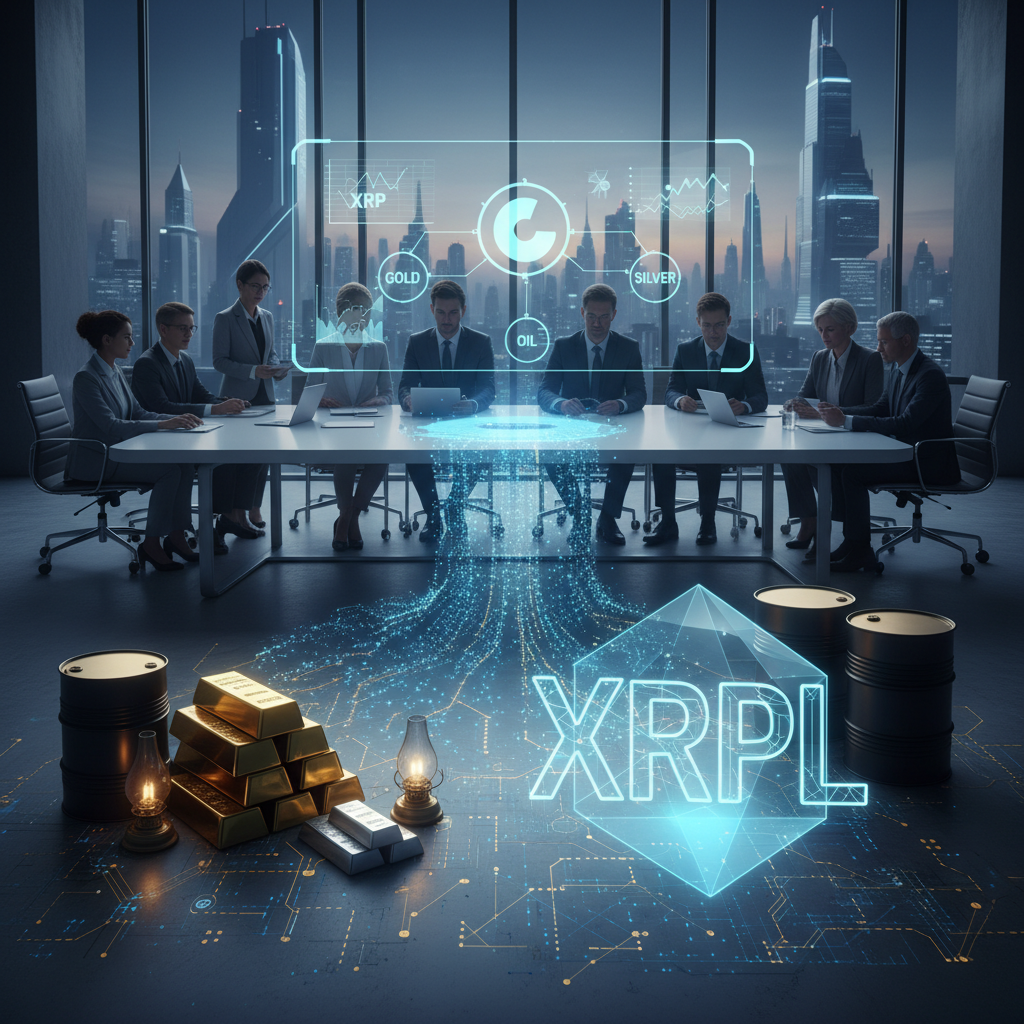
While the immediate access to commodity trading through Hyperliquid is a notable achievement, the direct impact on XRP's demand hinges on the successful migration of post-trade settlement to the XRPL. This move would position XRP not merely as a speculative asset but as an indispensable component of institutional commodity trading infrastructure. Such a development could significantly bolster institutional confidence in XRP, driving broader adoption and integration into mainstream financial portfolios. Prior to this, institutional XRP holdings were often compartmentalized, separate from traditional commodity or equity positions. Ripple Prime's offering aims to change this, allowing institutions to manage XRP alongside gold, silver, and oil within a single, cohesive margin framework.
Moreover, the broader regulatory landscape, particularly developments like the CLARITY Act in the United States, could play a crucial role in enabling banks to directly utilize XRP for such settlements. As the digital asset space matures, regulatory clarity is paramount for institutional players to fully embrace blockchain-based solutions. Ripple Prime's embedded position within the NSCC (National Securities Clearing Corporation) further suggests its readiness to handle tokenized stock and treasury flows anticipated later in the year, potentially solidifying the XRP Ledger's role in a future where a wider array of assets is tokenized and settled on-chain.
This initiative underscores a growing trend in the cryptocurrency market: the convergence of decentralized finance with real-world assets. As more tangible assets become tokenized and accessible on blockchain networks, the demand for efficient, secure, and scalable settlement layers will only increase. Ripple's strategic move with Ripple Prime and Hyperliquid positions the XRP Ledger to potentially capture a substantial portion of this evolving market, expanding its utility far beyond its initial scope of cross-border payments.