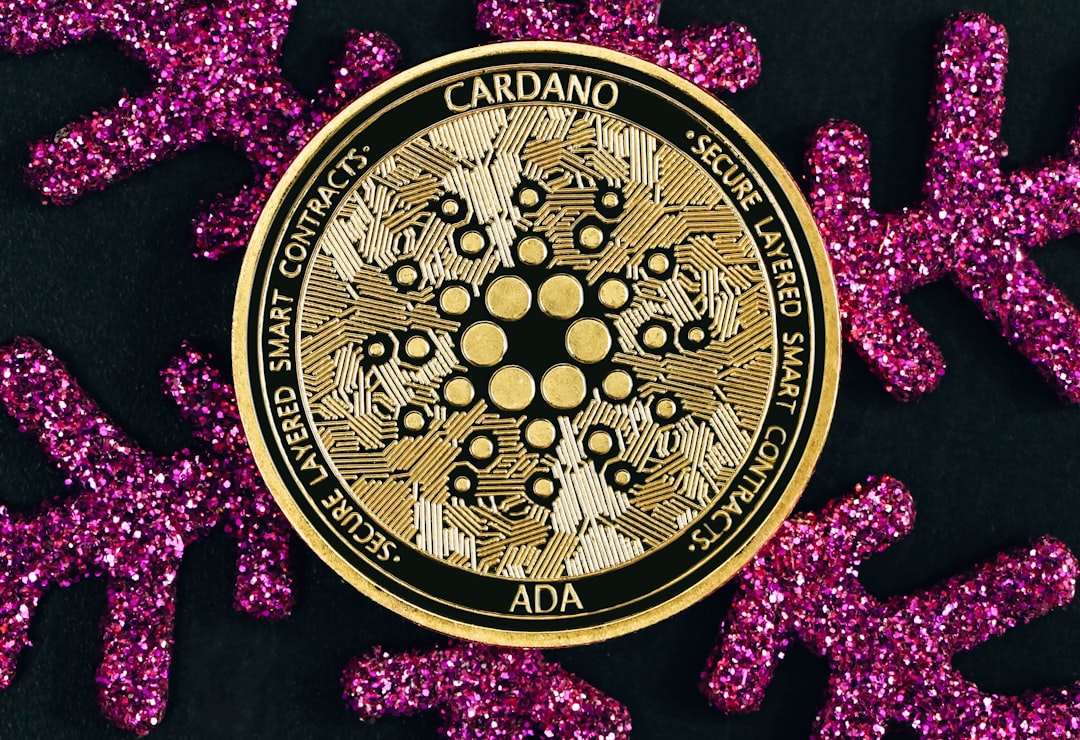
Cardano's Lace Wallet Updates for Van Rossem Hard Fork, Bolstering Governance
In a significant move poised to enhance its decentralized governance framework, the Cardano ecosystem is abuzz with the recent update to its official Web3 wallet, Lace. Input Output Global (IOG), the driving force behind Cardano's development, rolled out version 1.14.0 of the Lace wallet on May 10, 2026, a critical precursor to the network's highly anticipated Van Rossem hard fork. This upgrade is set to introduce robust on-chain governance capabilities, marking a pivotal step towards a more decentralized and community-driven future for the platform.
The Dawn of Decentralized Governance

The Van Rossem hard fork, also referred to as the Chang upgrade, is a cornerstone of Cardano's evolutionary roadmap, aiming to transfer governance authority directly to ADA token holders. This mechanism will empower users through a delegated representative system, fundamentally reshaping how decisions are made within the network. The recent Lace wallet update, arriving just days before the hard fork's mainnet activation, ensures that users are equipped with the necessary tools and compatibility to engage with these forthcoming governance features.
Developers at IOG have focused on delivering bug fixes and usability improvements within the Lace 1.14.0 release, refining the overall user experience and preparing the wallet for the significant protocol changes ahead. While the exact scope of fork-specific features within this particular wallet update remains to be fully detailed, the timing underscores its importance in facilitating a smooth transition for ADA holders, stakers, and decentralized application (dApp) users. Prompt updates are advised for all users to verify their balances and staking delegations.
The Van Rossem hard fork itself was submitted to the preview test network on May 6, 2026, signaling that Protocol Version 11 is moving closer to its mainnet deployment. This progression requires stake pool operators to upgrade to Node 11.0.1, ensuring network readiness.
Technical Advancements and Ecosystem Impact

Beyond governance, the Van Rossem hard fork promises substantial technical enhancements to Cardano's underlying infrastructure. Key among these are new Plutus smart contract functions, including improved array types and modular exponentiation. These additions are designed to bolster the network's smart contract capabilities, making it more attractive for developers building complex decentralized applications.
The ongoing development, highlighted by the successful integration of Protocol Version 11 into the testnet, is expected to strengthen developer adoption across the Cardano ecosystem. Such upgrades are crucial for boosting market confidence in ADA, Cardano's native cryptocurrency, and for laying the groundwork for future scalability initiatives. For instance, the roadmap includes ambitious plans for Ouroboros Leios, a consensus upgrade targeting a remarkable 10 to 65x increase in Layer 1 throughput, which would dramatically enhance transaction processing capabilities.
The continuous commitment to building and refining the network, even during broader market fluctuations, reinforces Cardano's long-term vision. This focus on fundamental improvements and decentralization is a key differentiator in the competitive altcoin landscape, where utility and robust infrastructure are paramount for sustained growth and adoption.
Looking Ahead: Cardano's Decentralized Future
The move towards on-chain governance via the Van Rossem hard fork represents a significant philosophical and operational shift for Cardano. By empowering ADA holders with direct voting power, the network aims to become more resilient, adaptable, and truly decentralized. Organizations like Intersect play a vital role in coordinating these efforts, ensuring a collaborative approach to Cardano's governance and development roadmap.
As the crypto world watches for the mainnet activation of the Chang upgrade, the preparatory steps, such as the Lace wallet update and testnet deployment, underscore a methodical and secure approach to network evolution. This methodical progress is essential for a blockchain platform of Cardano's scale, promising a future where its community can actively steer its direction, fostering innovation and stability. The continuous enhancements, particularly in smart contract functionality and potential throughput, position Cardano to attract further institutional interest and real-world utility in the years to come.